USA—‘blue-sky talk’ 1900—‘blue-sky research’ 1947—the adjective ‘blue-sky’ is used to mean: (in negative sense) fanciful, hypothetical; (in positive sense) creative or visionary—from the notion of a blue sky as a place free from disturbances or difficulties
informal and often humorous: denotes the explicit or most intimate details of something—originally (USA, 1859) referred to accounts or representations of acts of violence and bloodshed
UK, 1995—a derogatory designation of New Labour, i.e., a right-wing/social democratic trend in Labour thinking and policy, advocated by Tony Blair—‘Tory’: the British Conservative Party; ‘lite’ (phonetic respelling of the adjective ‘light’): a moderated version of something
1950—the exercise of ploys and tactics in order to minimise time spent waiting in a queue—composed of the noun ‘queue’ and the suffix ‘-manship’—here, ‘-manship’ does not refer to the skills worthy of a role, as in ‘horsemanship’ and ‘statesmanship’, but to the ploys used to gain the upper hand, as in ‘gamesmanship’
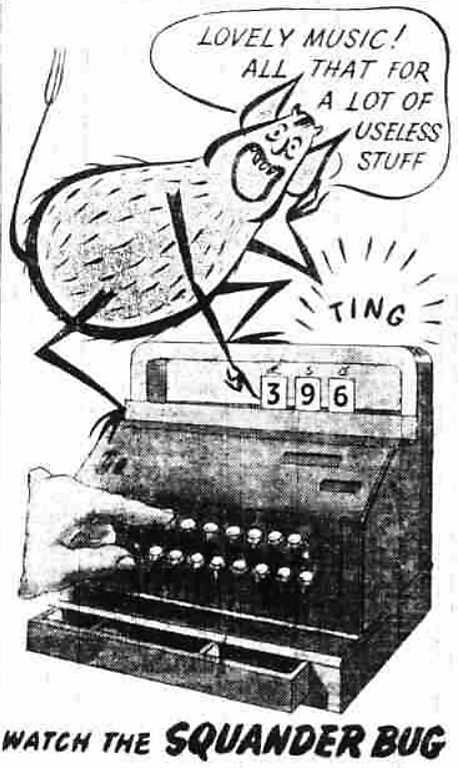
1943—a devilish insect symbolising reckless extravagance and waste—introduced by the National Savings Committee in a government publicity campaign promoting economy—hence: one who is profligate with money or resources
UK—(used of a group of people) to keep passing the initiative or responsibility from one person to another, so that no action is taken—refers to a party game in which a gift wrapped in several layers of paper is passed around a circle of players to the accompaniment of music, the losers in successive rounds being those holding the parcel when the accompanying music stops
‘parting shot’ (1817); ‘Parthian shot’ (1822): a sharp, telling remark, act, gesture, etc., made in departing—‘parting shot’: literally the final shot fired at the moment of departure—‘Parthian shot’: refers to the Parthian horsemen’s habit of shooting arrows backwards while in real or pretended retreat
Scotland, 1825 (as ‘bane idle’)—England, 1839—utterly lazy or indolent—‘bone’ seems to be used as an intensifier with adverbial force in the sense ‘through to the bone’, i.e., ‘deeply and fundamentally’
USA, 1843—With reference to a dog used for hunting game, this phrase is used to express the opinion that a particular plan or approach will not succeed.
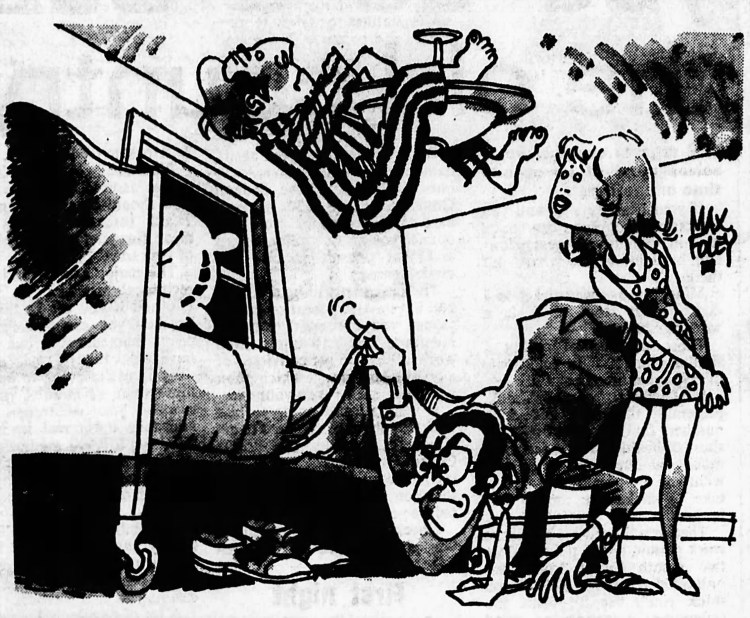
has been used to denote evidence of a de facto relationship affecting a woman’s eligibility for Social-Security benefits—refers to past practices of field officers inspecting homes and bedrooms

 word histories