‘to slave over a hot stove’: meaning and origin
to toil long and hard in cooking—USA, 1843—originally used in relation to women’s subjection to men
Read More
“ad fontes!”
to toil long and hard in cooking—USA, 1843—originally used in relation to women’s subjection to men
Read MoreUSA, 1973—a suburban mother who spends a lot of time taking her children to play soccer or engage in similar activities—popularised during the presidential election campaign of 1996 as designating an influential voting bloc
Read Morea country characterised by absurdity—originally used of Czechoslovakia—the suffix ‘-istan’ (in country names such as ‘Pakistan’) is used as the second element in satirical names denoting, in particular, ‘a country characterised by [the first element]’
Read Moresuicide committed by a person, especially a child or young adult, as a result of being bullied—blend of the nouns ‘bully’ and ‘suicide’—coined since 2001 on separate occasions by various persons, independently from one another
Read More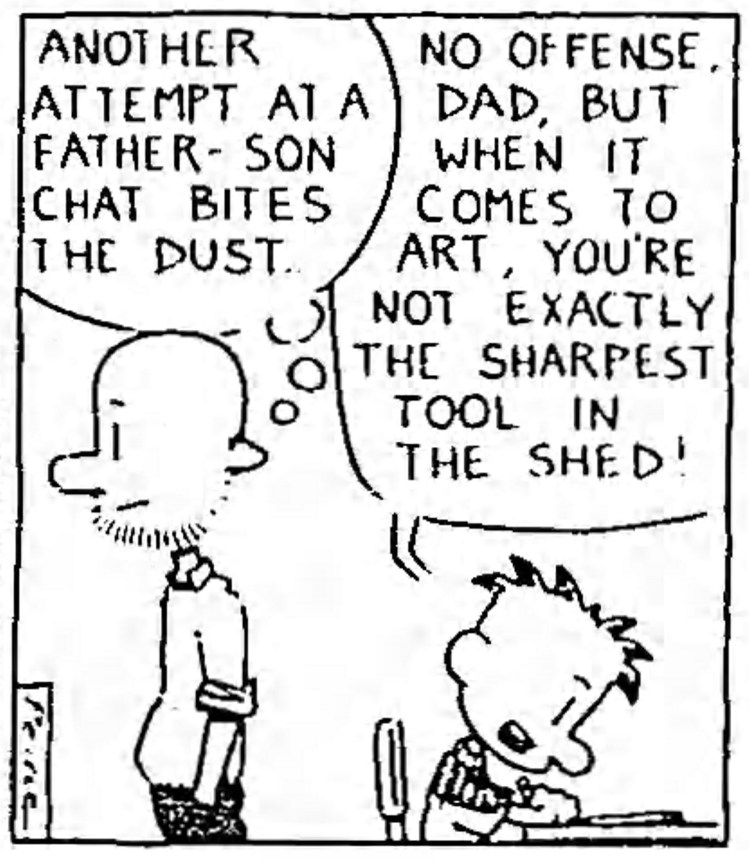
The adjective ‘sharp’ is colloquially used in the superlative, in various phrases of the form ‘not the sharpest —— in the ——’, indicating that a person is not very intelligent or perceptive, especially in comparison to others.
Read MoreUK, 1866—used as an observation, a reproof or a warning implying over-cleverness—plays on two meanings of the adjective ‘sharp’: a) literal meaning: ‘cutting’; b) figurative meaning: ‘keen-witted’
Read Moreused of a person who is implicated in an activity but accepts no responsibility for it—it was used in particular during the Watergate scandal by Senator William Saxbe to characterise President Richard Nixon
Read Morediarrhoea suffered by travellers, especially in Egypt—USA, 1973—does not seem to have been coined after the synonymous ‘Montezuma’s Revenge’—may somehow allude to the legendary curse of the pharaohs
Read Morediarrhoea suffered by travellers, especially in Egypt—1915, British Army—the word ‘gyppy’ is from ‘gyp’ in ‘Egyptian’, and the suffix ‘-y’, used to form familiar diminutives
Read MoreUK, 1972—the nouns ‘granny-bashing’ and ‘granny-battering’ denote: a) the assault or mugging of elderly persons; b) abuse of an elderly member of one’s family, especially one’s grandmother
Read More word histories