a linguistic investigation into ‘paparazzi’

The noun ‘paparazzo’ is from the name of a photographer in La Dolce Vita (1960) by Federico Fellini. The choice of this name has been variously explained.
Read More
“ad fontes!”
The noun ‘paparazzo’ is from the name of a photographer in La Dolce Vita (1960) by Federico Fellini. The choice of this name has been variously explained.
Read More
plate 19: La Trénis, Contredanse source: gallica.bnf.fr / Bibliothèque Nationale de France from the 1931 reprint of the caricatures published under the title of Le Bon Genre (1827 edition), including Observations sur les modes et les usages de Paris; the following comment about La Trénis accompanies this plate: (Année 1805.) Cette danse porte le […]
Read MoreIn the United Kingdom, especially in the mid-1950s, a Teddy boy was a young man characterised by a style of dress and appearance held to be characteristic of Edward VII’s reign (1901-10), typically a long velvet-collared jacket, drainpipe trousers and sideburns (Teddy is a pet form of Edward (VII)). The term first appeared in print […]
Read MoreThe primary meaning of the humorous pseudo-French British-English expression nul points is: a score of zero points in the Eurovision Song Contest, in which the points awarded by each country are announced in both English and French. This expression is composed of: – the French adjective nul, meaning no (that is, not one); the choice of […]
Read More
The Ranz des Vaches – from A Complete Dictionary of Music (1779) The term ranz-des-vaches denotes a type of Swiss melody, traditionally played on the Alpenhorn or sung in order to call cows scattered over the mountainside. The melody is characterised by the reiteration of short phrases and usually contains an element […]
Read MoreThe noun pastis designates an aniseed-flavoured aperitif, while pastiche, or pasticcio, denotes a work of art that imitates the style of another artist or period and a work of art that mixes styles, materials, etc. Unlikely as it may seem, these words are doublets, or etymological twins: although they differ in form and meaning, they go […]
Read More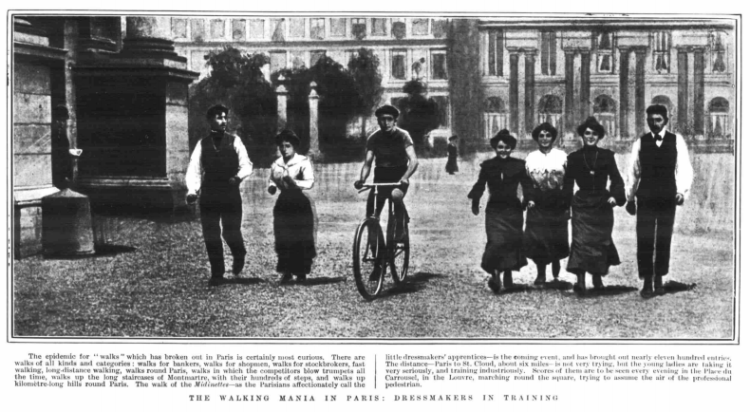
Phonetically and semantically similar to milliner, the French word midinette was defined as “a milliner’s female assistant, especially in Paris” in the 1933 Supplement to the New English Dictionary (as the Oxford English Dictionary was known). However, while milliner literally means a Milanese, a native or inhabitant of Milan, midinette is a portmanteau word, composed […]
Read MoreThe adjective piping hot is used to refer to very hot food or liquid, usually when served. It referred originally to the hissing of viands in the frying pan, the verb pipe meaning, in this case, to make a whistling sound. This adjective is first attested in The Miller’s Tale, by the English poet Geoffrey […]
Read MoreMEANING to stay up very late in order to study or do some other work ORIGIN The word oil was used in various phrases referring to the use of oil in a lamp for nocturnal study. For example, to lose one’s oil meant to study or labour in vain; the English historian […]
Read More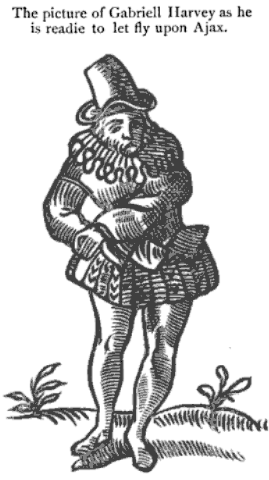
Caricature of Gabriel Harvey from Haue with you to Saffron-walden. Or, Gabriell Harueys hunt is vp (1596), by Thomas Nashe. Entitled The picture of Gabriell Harvey as he is readie to let fly upon Ajax, this caricature depicts him rushing to the toilet at the thought of Nashe’s publication. Ajax was a pun on […]
Read More word histories