meaning and history of the term ‘man flu’
1999—a cold as experienced by a man who is regarded as exaggerating the severity of the symptoms—popularised by British magazine Nuts in 2006
Read More
“ad fontes!”
1999—a cold as experienced by a man who is regarded as exaggerating the severity of the symptoms—popularised by British magazine Nuts in 2006
Read More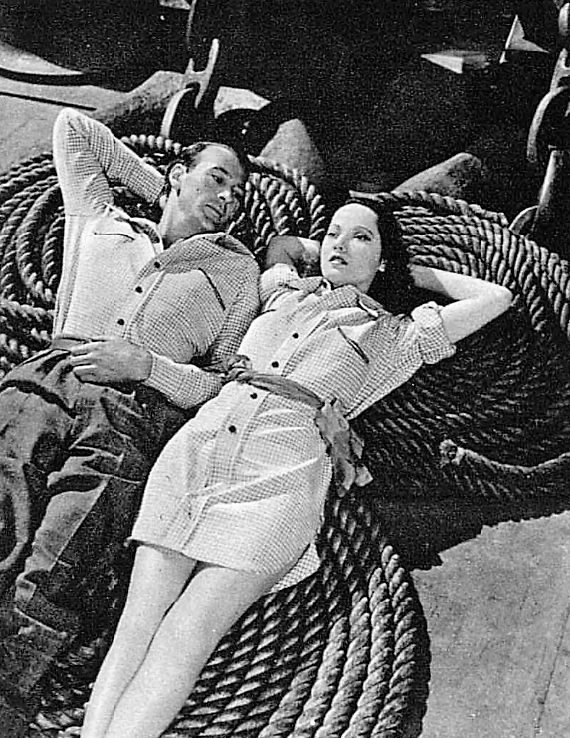
UK, 1939—characteristic of, or similar in spirit to, the films of the Italian-born American film director Frank Capra (1897-1991)
Read More
1934—pompous, reactionary type of person—from the cartoon character (a pompous retired British army officer voicing a hatred of new ideas) created by David Low
Read More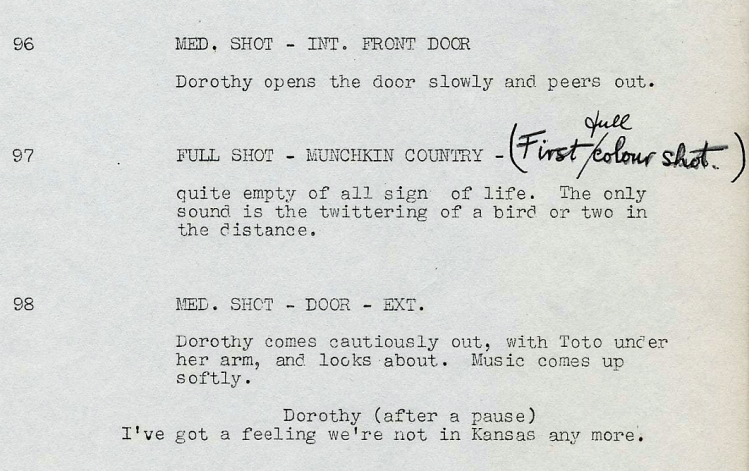
USA, 1971—in dramatically changed circumstances—said by Dorothy in The Wizard of Oz (1939) when realising she has been transported from Kansas to the land of Oz
Read More
USA 2005—a pessimistic or negative person—popularised, if not introduced, by the character of Debbie Downer in the U.S. television variety series Saturday Night Live
Read More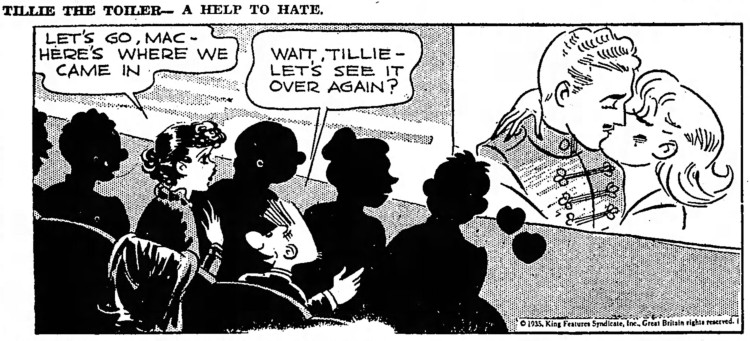
when there were consecutive screenings of a film, spectators could start watching at any point and stay on to watch the first part on the next showing
Read More
USA, 1942, Army slang—popularised in the Army weekly ‘Yank’ by ‘The Sad Sack’, a cartoon strip by George Baker, depicting the misfortunes of an inept private
Read MoreUK 2006—to play recherché music on a jukebox with the intent of irritating pub customers—attributed to Carl Neville in reference to Robert Wyatt’s ‘Dondestan’
Read More
‘cheese-eating surrender monkeys’: the French people (USA, 1995) from The Simpsons—‘tea-drinking surrender monkeys’: the British people (Ireland, 2004)
Read More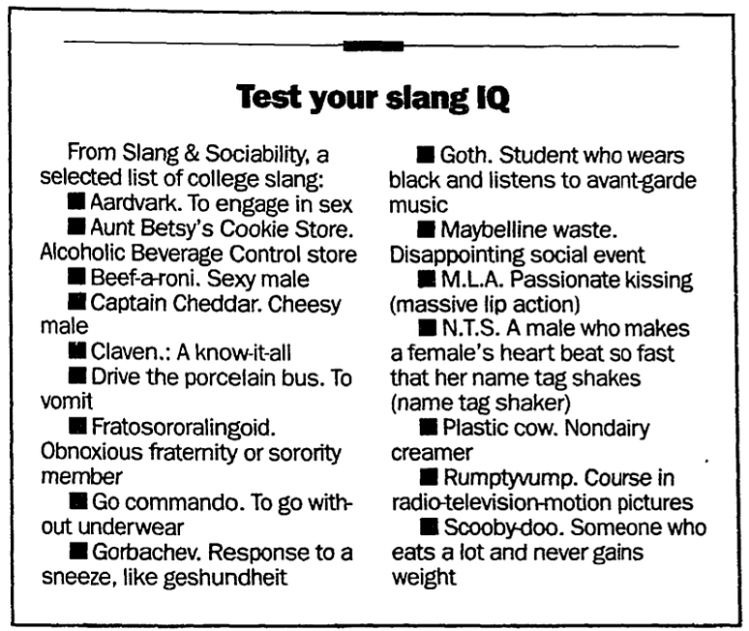
USA, 1974—to wear no underpants—originated in university slang—perhaps because commandos wear no underpants in order to prevent crotch rot and rashes
Read More
