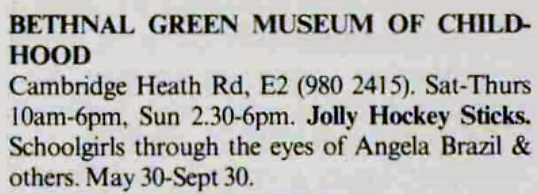
BETHNAL GREEN MUSEUM OF CHILDHOOD Cambridge Heath Rd, E2 (980 2415). Sat-Thurs 10am-6pm, Sun 2.30-6pm. Jolly Hockey Sticks. Schoolgirls through the eyes of Angela Brazil¹ & others. May 30-Sept 30. from The Illustrated London News – May 1984 (¹ Angela Brazil (1868-1947), British author of schoolgirls’ stories) The exclamation jolly hockey stick(s) is […]
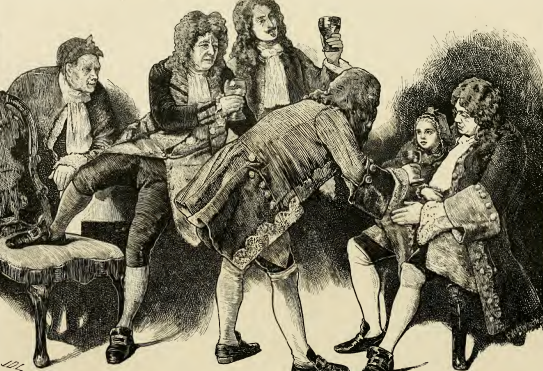
Lady Mary Wortley Montagu and the Kit-Kats – illustration from Old and New London: A Narrative of its History, its People, and its Places (1873), by Walter Thornbury (The Kit-Cat, or Kit-Kat, Club in London was a club of Whig politicians and men of letters founded in the reign (1685-8) of James II; its […]
Of American-English origin, the phrase to look, or to feel, like something the cat has brought in means to look, or to feel, exhausted or bedraggled. The earliest instances of the form, if not of the phrase, that I have found are in, and as the title of, a story published in The Perrysburg Journal (Perrysburg, Ohio) of 2nd February 1877 […]
The word daisy is from Old English dæges éage, meaning day’s eye. This name alludes to the fact that the flower of this plant opens in the morning and closes at night, as the human eye does. Perhaps its petals, which close over its bright centre at the end of the day, were also thought to resemble human eyelashes. But the […]
Several colloquial phrases associate daisies with being dead: under the daisies, which means dead and buried, to push up (the) daisies and to turn one’s toes up to the daisies, which mean to be in one’s grave, to be dead. The Clare Journal, and Ennis Advertiser (Ireland) of 9th August 1838 published this poem: […]
The phrase the cup that cheers but not inebriates and its variants refer to tea as a drink which invigorates a person without causing drunkenness. It is from The Winter Evening, the fourth book of The Task. A Poem, in six Books (1785), by the English poet and letter-writer William Cowper (1731-1800): Now stir the fire, and close the […]
The phrase curate’s egg means something that has both good and bad characteristics or parts. This phrase was popularised by True Humility, a cartoon by George du Maurier *, published in Punch, or the London Charivari (London, England) of Saturday 9th November 1895. This cartoon depicts a meek curate who, having been served a stale egg while […]
The phrase hell hath no fury like a woman scorned is a misquotation from The mourning bride, a tragedy by the English playwright and poet William Congreve (1670-1729), produced and published in 1697: Vile and ingrate! too late thou shalt repent The base Injustice thou hast done my Love. Yes, thou shalt know, spite of thy past Distress, […]
Literally denoting a mouse which lives in a church, the noun church mouse has long been used figuratively and allusively of a person likened to such a mouse, in terms of its proverbial attributes, especially in being impoverished or quiet. For example, the Anglo-Welsh historian and political writer James Howell (circa 1594-1666) recorded the following […]
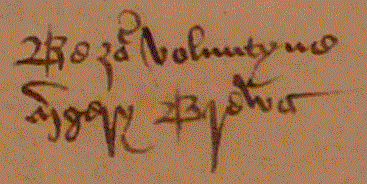
There are two Valentines, both Italian, one a priest and the other a bishop, who were martyred and used to be commemorated in the Roman Catholic calendar on 14th February. However, they have no romantic associations and the modern customs linked with St Valentine’s Day arise from a tradition according to which it is the day when the […]