meaning and origin of the phrase ‘plain Jane’
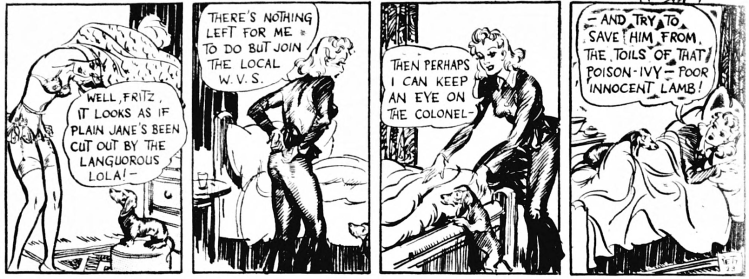
UK, 1898, in ‘plain Jane and no nonsense’—a dull or unattractive girl or woman—‘Jane’ chosen because it is common and rhymes with ‘plain’
Read More
“ad fontes!”
UK, 1898, in ‘plain Jane and no nonsense’—a dull or unattractive girl or woman—‘Jane’ chosen because it is common and rhymes with ‘plain’
Read Moreisolated use in The Fancies, Chast and Noble (1638), by John Ford—1795 as ‘to ride bodkin’—seems to allude to the thinness of the tools that have that name
Read MoreUK, 1837—something intended, but failing, to impress—if damp, a squib [a small firework] will fail to work
Read More1892, as ‘mazed as a brish’ (Devon)—meaning: extremely stupid—possible origin: anything is daft that does all the hard work
Read More1868, but late 16th century as ‘care [= disquiet] killed a cat’—the image is perhaps that disquiet would exhaust the nine lives allotted to a cat
Read MoreUSA, 1928—originally referred to scenario improvising during the silent-film era—the image is of notes written on a shirt-cuff
Read MoreUK, 1755—loan translation from French ‘un mauvais quart d’heure’ (1710), which has also been used in English since 1830
Read More
UK, 1992 (coined by Terence Blacker)—a novel depicting the lives and concerns of the British rural middle classes—from the association of Aga cookers with those classes
Read More
(jocular) to become unduly agitated or angry—twisted clothing as a metaphor for mental confusion—UK, 1971, in the comic strip Andy Capp
Read More
Irish English, 1907—out of touch with reality—ultimately refers to the belief that the fairies spirit away human beings
Read More word histories