‘not waving but drowning’: meaning and origin

used of a person whose display of distress misleads others into underestimating this distress—UK, 1962—from ‘Not Waving but Drowning’ (1954), by Stevie Smith
Read More
“ad fontes!”
used of a person whose display of distress misleads others into underestimating this distress—UK, 1962—from ‘Not Waving but Drowning’ (1954), by Stevie Smith
Read MoreUK, 1963—ostentatious vulgarity in social life—from the literal sense of a fashionably dressed woman whose appearance covers vulgarity
Read More
UK, 1899—warning that touring actors wrote in the visitors’ books of low-quality lodgings—alludes to ‘Quoth the raven, “Nevermore.”’ in Edgar Poe’s ‘The Raven’
Read More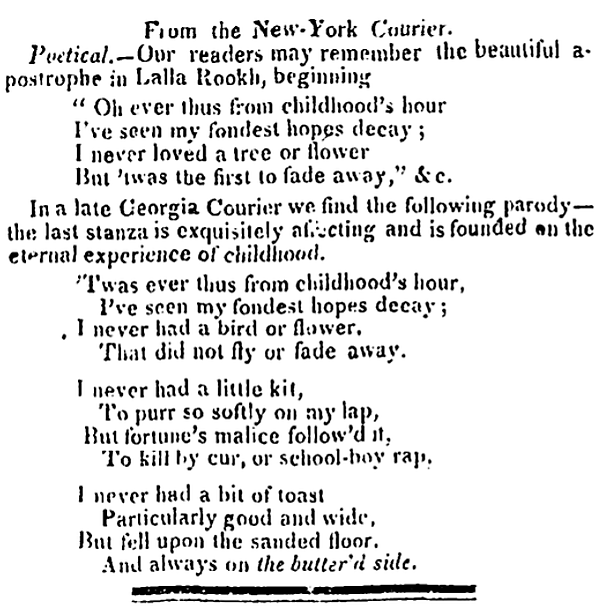
USA, 1829—expresses picturesquely the supposed law of nature according to which, for any given situation, the worst of possible outcomes will inevitably occur
Read More
UK, 1973—refers to a woman’s breasts as revealed e.g. by a very low-cut dress, or to (the contours of) a woman’s genitals as revealed e.g. by a very short skirt
Read More
I am happy with my situation (so much so that even becoming royalty could not improve on it)—UK, 1843 as ‘I would not give sixpence to call the Queen my aunt’
Read More
to achieve the impossible—USA, 1881—originally and chiefly used with reference to hair loss treatment
Read More
extremely slow—USA, 1874—in Christian theology, the Second Coming of Christ is the prophesied return of Christ to Earth at the Last Judgement
Read More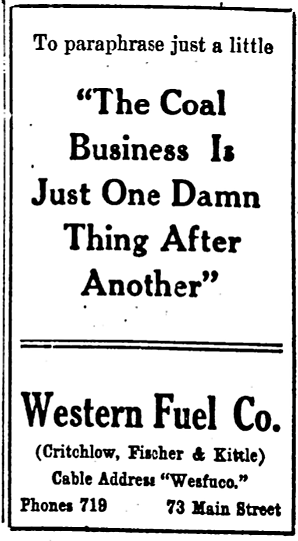
USA, 1909—first with grammatical subject ‘life’, meaning ‘life consists of a succession of unpleasant or unlucky events’—then with other grammatical subjects
Read Morefrom Shakespeare’s ‘Macbeth’—1814 ‘lay on, Macduff’: go ahead (and give it your best try)—1855 misquotation ‘lead on, Macduff’: let’s get going, start us off
Read More
