USA (New England), 1868—alternately sunny and cloudy conditions usually indicate rain—the adjective ‘shet’ is a variant of ‘shut’—it was perhaps in order to provide a rhyme for the adjective ‘wet’ that the variant ‘shet’ was chosen in the proverb
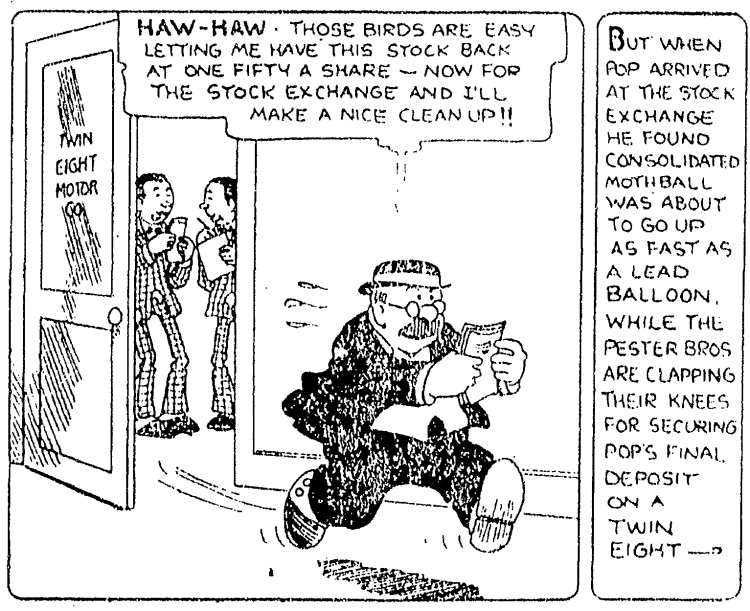
USA, 1933—a failure, an unsuccessful venture—especially used of suggestions, jokes, etc., made in public—the image is of a balloon made of lead plummeting to the ground
USA, 1837—to make assumptions about someone or something based on appearance or on superficial characteristics—the metaphor occurs in the preface to ‘Truth in Fiction: Or, Morality in Masquerade. A Collection of Two hundred twenty five Select Fables of Æsop, and other Authors’ (London, 1708), by Edmund Arwaker
an artist or writer who produces what is considered to be inferior work simply to earn a living—loan translation from German ‘Brotkünstler’—first used in 1827 by Scottish historian and political philosopher Thomas Carlyle in a text about German literature
to use unnecessary force in destroying something fragile—alludes to a wheel used as an instrument of torture—first occurs in An Epistle from Mr. Pope, to Dr. Arbuthnot (1734), by the English poet Alexander Pope (1688-1744), who perhaps coined this phrase
The following slang expressions have been used to designate the mouth: ‘box of ivories’ (also ‘ivory-box’); ‘box of dominoes’ (also ‘domino-box’); ‘bone-box’; ‘potato-box’; ‘potato-jaw’; ‘potato-trap’; ‘kissing-trap’.
Australia and New Zealand, 1939—to be in good spirits, ‘chirpy’—the image is of a boxful of chirping birds (cf. the extended form ‘happy as a bird in a box of birdseed’)—New-Zealand variant ‘to be a box of fluffy ducks’, also ‘to be a box of fluffies’
1804—used to express resignation regarding an undesirable aspect of the behaviour of a girl or young woman, as being supposedly characteristic of her age or sex
1721—used to express resignation regarding an undesirable aspect of the behaviour of a boy or young man, as being supposedly characteristic of his age or sex
British, 1907—denotes considerable talent or ability to grow plants—in this phrase, the adjective ‘green’ refers to the colour of growing vegetation—1921: ‘green-thumbed’ (adjective)



 word histories