Australia, 1901—refers to rough penmanship—alludes to Clancy of the Overflow (originally published in The Bulletin, Sydney, on 21st December 1889), by the Australian poet Andrew Barton Paterson
1842—The noun ‘patter’ denotes the sound of light footfall, and the phrase ‘the patter of tiny feet’, and its variants, denote the presence of one or several young children, or the imminent birth of a child.
to surpass everything—Ireland, 1821—probably refers to a strong military fort at Banagher, a town in County Offaly, in the province of Leinster, Ireland
1609—to add to what is already great, also to add difficulty to difficulty—Pelion and Ossa are two mountains in Thessaly—in Greek mythology, two giants, Otus and Ephialtes, tried to pile Pelion and Ossa on Olympus in order to reach the gods and overthrow them
UK, 1938—a state of nervous agitation or confusion; also, occasionally: a state of physical disorder or chaos—of unknown origin; perhaps a fanciful variant of the synonymous noun ‘tizz’
USA, 1974—a moment of sudden realisation, enlightenment or inspiration—alludes to the representation of an illuminated lightbulb above a character’s head in a cartoon or comic strip, indicating that this character has had an idea
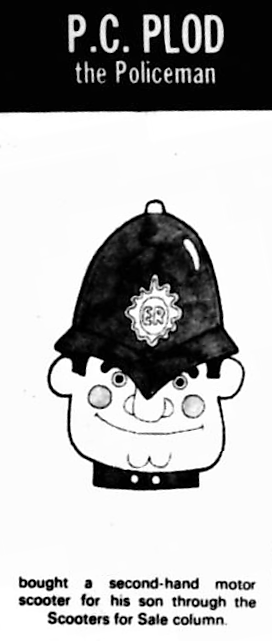
UK, 1963—‘Mr. Plod’, also ‘P.C. Plod’, ‘Plod’: a humorous or mildly derogatory appellation for a policeman or for the police—alludes to ‘Mr. Plod’, the name of the policeman in stories by the English author of children’s fiction Enid Blyton


 word histories