Australia—also ‘to bang like a shithouse door’—used of an exceptional sexual partner—plays on two meanings of the verb ‘bang’: ‘to make a loud noise’ and ‘to have sexual intercourse’
The noun ‘dunny’ denotes a toilet, especially an outside toilet. This noun has been used in various phrases expressing notions such as conspicuousness, loneliness, ill luck, etc.
The proverbial phrase ‘if it should rain pottage, he would want his dish’, and its many variants, are used of a person who is characterised by bad luck or by an inability to be organised or prepared.
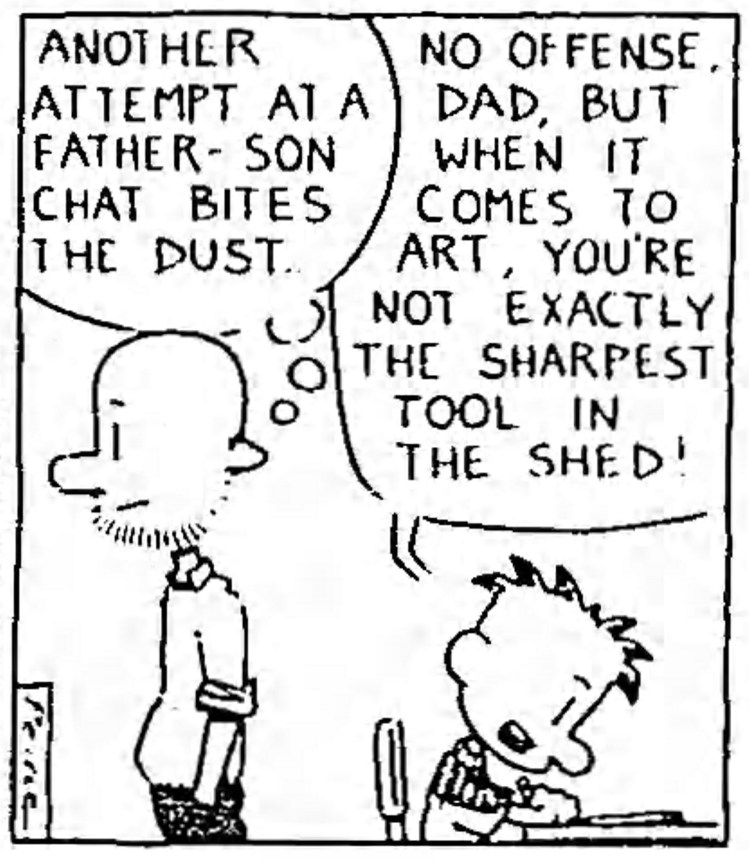
The adjective ‘sharp’ is colloquially used in the superlative, in various phrases of the form ‘not the sharpest —— in the ——’, indicating that a person is not very intelligent or perceptive, especially in comparison to others.
UK, 1866—used as an observation, a reproof or a warning implying over-cleverness—plays on two meanings of the adjective ‘sharp’: a) literal meaning: ‘cutting’; b) figurative meaning: ‘keen-witted’
diarrhoea suffered by travellers, especially in Egypt—1915, British Army—the word ‘gyppy’ is from ‘gyp’ in ‘Egyptian’, and the suffix ‘-y’, used to form familiar diminutives
Australia—‘charity dame’ 1949—‘charity moll’ 1962—an amateur prostitute who charges less than the usual rate—from ‘Moll’, pet form of the female forename ‘Mary’, the noun ‘moll’ has long been used to designate a prostitute
USA, 1825—the phrases that are built on the pattern ‘(as) [adjective] as a meat-ax(e)’ intensify the meaning of the adjective—this adjective can be ‘savage’, ‘wicked’, or ‘mad’
1942—an arena of fierce or ruthless rivalry—borrowed from French: literally ‘basket of crabs’—the image is of crabs fighting, if not devouring one another, when kept in a basket