Old English ‘werewulf’ (first element identified with Old English ‘wer’, ‘man’) first used for ‘wolf’ to denote a person serving Satan (cf. Gospel of Matthew “Beware of false prophets, who come to you in sheep’s clothing, but inwardly they are ferocious wolves”)
‘scruple’—from Latin ‘scrūpŭlus’, literally ‘a small sharp or pointed stone’—probably because such stones used to get into the open shoes of the Romans, ‘scrūpŭlus’ came to denote ‘a pricking, uneasy sensation’, hence ‘trouble’, ‘doubt’, ‘scruple’
A diminutive of ‘pūpa’ (‘a girl’, in transferred use also ‘a doll’), the Latin feminine noun ‘pūpilla’ came to also denote ‘the pupil of the eye’ on account of one’s own reflection seen when looking into somebody’s eye—the same metaphor underlies ‘to look babies in somebody’s eyes’.
‘Magazine’ (= ‘storehouse’) came to denote a book providing information on a specified subject (17th c.). This gave rise to the sense ‘periodical magazine (= ‘repository’) of the most interesting pieces of information published in the newspapers’ (18th c.).
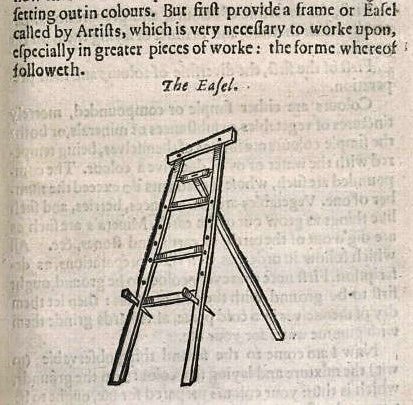
The noun ‘easel’ was borrowed from Dutch ‘ezel’; this sense of ‘ezel’ is a metaphorical extension of its literal meaning, ‘ass’, from the fact that, like a beast of burden, an easel is used to carry things. Likewise, the literal meaning of the synonymous French word ‘chevalet’ is ‘little horse’.
U.S.—‘to see the elephant’: to see life, the world or the sights, as of a large city, to gain knowledge by experience. But in 1842, the original meaning of ‘to see the elephant’ was ‘to get sick and tired of something’.
‘Glamour’ was originally a Scottish alteration of ‘grammar’: this article explains how it came to denote an attractive or exciting quality that makes certain people or things seem appealing. Classical Greek γραμματική (= grammatikḗ) and classical Latin grammătĭca denoted the methodical study of literature, that is to say, philology in the widest modern sense, including textual […]
The 1776 French translation of Laurence Sterne’s ‘The Life and Opinions of Tristram Shandy’ gave to French ‘dada’, a child’s noun for ‘horse’, the figurative meaning of ‘favourite pastime’ or ‘pet idea’.
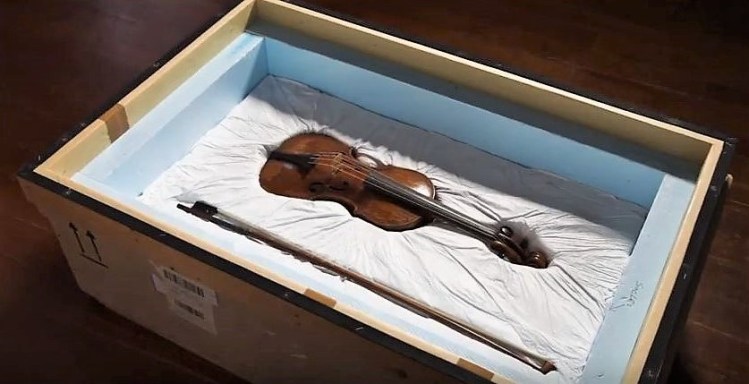
First recorded in The Bystander (London) on 24 January 1906, this French phrase means ‘hobby, pastime’; it refers to the passion that the French painter Jean Auguste Dominique Ingres (1780-1867) had for playing the violin.
‘Hobby’, diminutive of ‘Hob’, pet form of ‘Robert’, was used to denote a small horse, hence a child’s toy with a horse’s head, hence a favourite occupation—cf. French ‘dada’, child’s word for horse, used to denote a favourite pastime