from the name of Mrs Malaprop, a character who confuses long words in The Rivals (1775), a comedy by the Irish playwright Richard Brinsley Sheridan—character named after ‘malapropos’, from the French locution ‘mal à propos’, literally ‘ill to purpose’
from the 16th-century phrase ‘to set cock a hoop’, ‘to set (the) cock on (the) hoop’, apparently meaning ‘to put the cock (= spigot) on a barrel hoop and let the liquor flow prior to a drinking bout’—‘cock’ later equated with the fowl and ‘hoop’ with French ‘huppe’ (tufted crest)
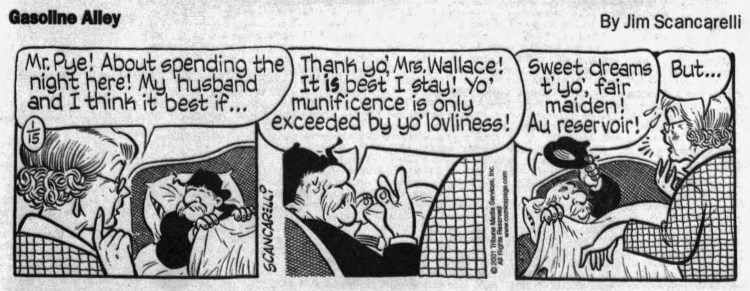
A humorous alteration of ‘au revoir’ after the noun ‘reservoir’, the exclamation ‘au reservoir’ is first recorded in Little Pedlington and the Pedlingtonians (London, 1839), by the English author John Poole (1786-1872).
‘to plough a lonely furrow’, or ‘one’s own furrow’ (UK, 1901): to carry on without help, support or companionship—French ‘creuser son sillon’ (‘to dig one’s own furrow’, first used by Voltaire): to carry out with courage and perseverance the task undertaken
Italian translation of Latin ‘in pectore’ (‘in the breast’, ‘in the secret of the heart’)—when a pope announces that he has appointed a cardinal whom he reserves ‘in petto’, it means that he will reveal this cardinal’s name later
1794—from French ‘terroriste’ (1794): during the French Revolution, adherent or supporter of Robespierre’s faction, who advocated and practised the Terror (methods of partisan repression and bloodshed in the propagation of the principles of democracy and equality)
Old English ‘werewulf’ (first element identified with Old English ‘wer’, ‘man’) first used for ‘wolf’ to denote a person serving Satan (cf. Gospel of Matthew “Beware of false prophets, who come to you in sheep’s clothing, but inwardly they are ferocious wolves”)
‘scruple’—from Latin ‘scrūpŭlus’, literally ‘a small sharp or pointed stone’—probably because such stones used to get into the open shoes of the Romans, ‘scrūpŭlus’ came to denote ‘a pricking, uneasy sensation’, hence ‘trouble’, ‘doubt’, ‘scruple’
A diminutive of ‘pūpa’ (‘a girl’, in transferred use also ‘a doll’), the Latin feminine noun ‘pūpilla’ came to also denote ‘the pupil of the eye’ on account of one’s own reflection seen when looking into somebody’s eye—the same metaphor underlies ‘to look babies in somebody’s eyes’.
‘Magazine’ (= ‘storehouse’) came to denote a book providing information on a specified subject (17th c.). This gave rise to the sense ‘periodical magazine (= ‘repository’) of the most interesting pieces of information published in the newspapers’ (18th c.).

 word histories