UK, 1832—‘the awkward age’: the adolescence, when one is no longer a child but not yet properly grown up, a time of life characterised by physical and emotional changes—translates in French as ‘l’âge ingrat’, ‘the thankless age’
USA, 1917 (with ‘footie’): to touch somebody’s foot lightly with one’s own foot, especially under a table, as a playful expression of romantic interest—hence also, figuratively: to have underhanded dealings with somebody
‘double Dutch’, 19th century—from ‘Dutch’ in the sense of a language that few people can speak, and ‘double’ as a mere intensifier—‘High Dutch’, 17th century—loan translation from French ‘haut allemand’ (= ‘High German’), used in the sense of gibberish
late 16th century—from early modern Dutch ‘maelstrom’ (now ‘maalstroom’)—originally a proper name designating a powerful whirlpool in the Arctic Ocean, off the west coast of Norway, which was formerly supposed to suck in and destroy all vessels within a wide radius
1763 in French, 1798 in English—from the name of Étienne de Silhouette (1709-67), Controller-General of Finances in 1759—perhaps because he might have invented the portrait in profile obtained by tracing the outline of a head or figure by means of its shadow
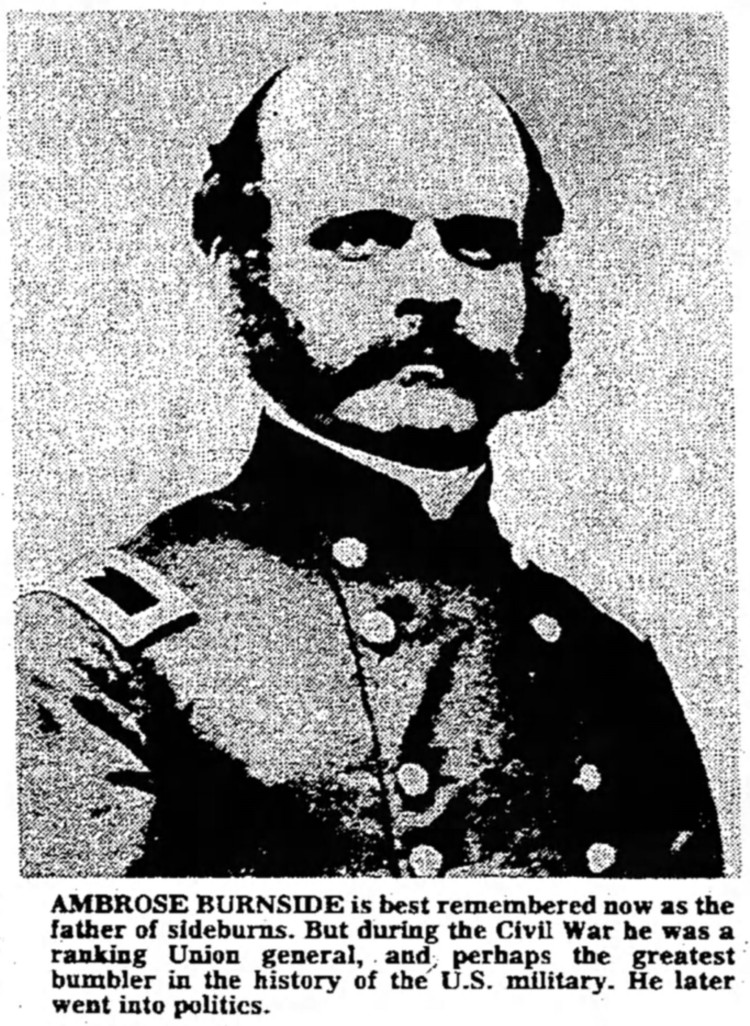
After Ambrose Burnside, Union general in the U.S. Civil War, ‘burnsides’ (1866) denotes thick side whiskers worn with a moustache and clean-shaven chin; on the pattern of ‘side whiskers’, it was altered to ‘sideburns’ (1875), itself altered to ‘sideboards’ (1882).
‘coward’—from Old-French ‘cuard’, probably referring to a frightened animal with its tail between its legs—from ‘cüe’ (Modern French ‘queue’), ‘tail’, and pejorative suffix ‘-ard’ (cf. ‘bastard’)—‘cowardy, cowardy custard’, alliterative nonsensical children’s phrase (19th century)
Classical Latin ‘muscŭlus’, literally ‘a little mouse’, also denoted ‘a muscle of the body’, especially of the upper arm, from the resemblance of a flexing muscle to the movements made by a mouse; ‘muscŭlus’ was also used in the sense of ‘mussel’.
first recorded in 1480—from Portuguese ‘marmelada’ (quince marmalade), from ‘marmelo’ (quince), itself from Latin ‘malomellum’ (quince, sweet pome), a blend of Latin ‘mēlŏmĕli’ (syrup of preserved quinces) and ‘mĕlĭmēla’ (a variety of sweet pome)
16th century—from the Latin adjective ‘praeposterus’, composed of the adverb ‘prae’ (‘in front’, ‘before’) and the adjective ‘posterus’ (‘coming after’, ‘following’, ‘next’), so that its literal sense is ‘next (placed) first’, ‘having first what should be coming after’.




 word histories