‘would bog a duck’: meaning and origin
is used of waterlogged land—USA,1859—Australia, 1874—now chiefly Australian
Read More
“ad fontes!”
is used of waterlogged land—USA,1859—Australia, 1874—now chiefly Australian
Read MoreUK, 1793—a drink made from an egg yolk whisked into warm water, used as a remedy for colds—loan translation from French ‘lait de poule’ (1746)
Read MoreUK, 1867—a disastrous or particularly unpleasant year—Latin, literally ‘a horrible year’—coined after Latin ‘annus mirabilis’, literally ‘an extraordinary year’
Read MoreUK, 1837—very weak tea—from the fact that the wife drank the first brew, and then, to make her husband’s tea, filled the pot with water, adding no fresh leaves
Read Morepeople who meet for a short time, by chance, and then do not see each other again—people who, although living together, are unable to see very much of each other—coined in 1873 by the U.S. poet Henry Wadsworth Longfellow
Read Morethe clichéd literary topos of a young woman who is in trouble and needs a man’s help—1694, in a text by Joseph Addison
Read Moregrim and ironical humour—UK, 1860, in reference to the practice of public executions—UK, 1870, as a loan translation from German ‘Galgenhumor’, in the context of the Franco-Prussian War
Read More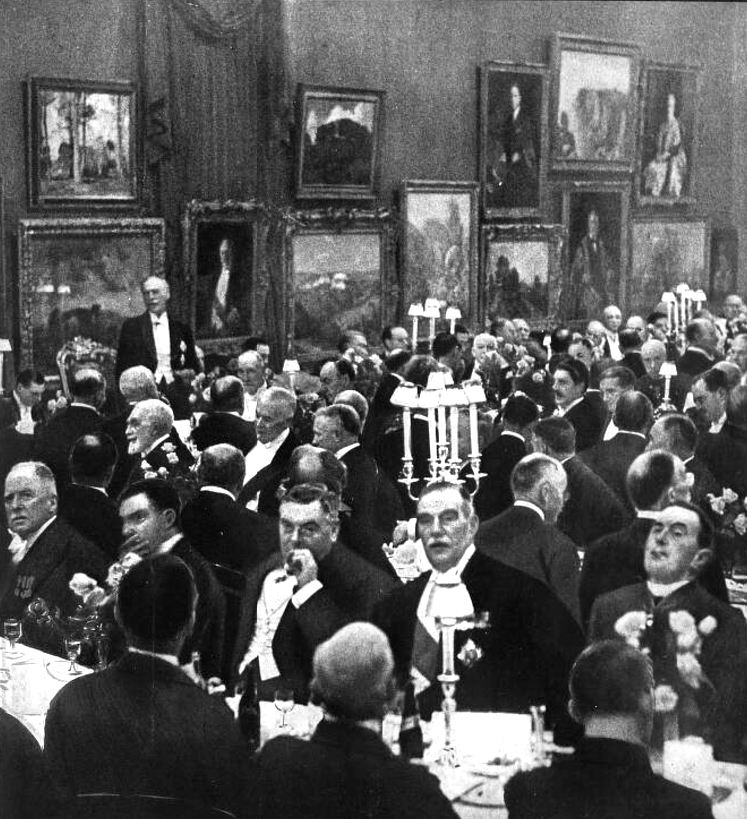
UK, 1929—a small camera for taking informal photographs of persons, usually without their knowledge—earlier occurrences (UK & USA, from 1907 to 1924) are often of unclear meaning
Read MoreAustralia, 1918—to get selected for a task, to gain recognition or approval, to succeed—the image is of getting selected in a sporting team (‘guernsey’: a shirt worn by soccer or rugby players)
Read MoreUSA, 1914—origin unknown—a long rambling joke ending in a deliberate anticlimax, such as an absurd or irrelevant punchline
Read More word histories