‘mushroom treatment: kept in the dark and fed bullshit’
American English, 1965—signification: to be kept in a state of ignorance and told nonsense—in use a few years later in Australian English and British English
Read More
“ad fontes!”
American English, 1965—signification: to be kept in a state of ignorance and told nonsense—in use a few years later in Australian English and British English
Read MoreUSA, 1984—used to indicate that something is blatantly obvious—humorously from ‘Is the Pope Catholic?’ and ‘Does a bear shit in the woods?’
Read More
USA, 1951—rhetorical question used ironically as a response to a question or statement felt to be blatantly obvious
Read MoreUSA, 1944—sarcastic remark used in exasperation at an impatient motorist who persistently toots their horn—likens the motorist to a child in a toy car
Read More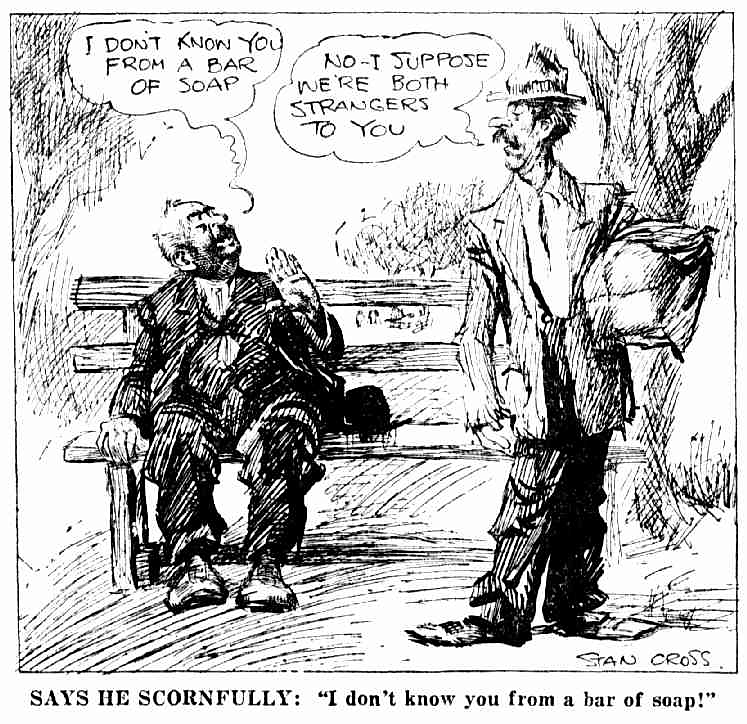
to be completely unacquainted with someone or something—most earliest uses (late 19th century) in U.S. publications, but a few in Australian publications
Read More
1950—used of a substance causing death or illness, and by extension of something powerful or disastrous—refers to red kelpie sheep dogs, who can ingest anything
Read More
20th century—originally a precautionary stipulation in announcements of events such as church fêtes—hence used humorously of any forthcoming event
Read MoreAustralia, 1969—used to denote a fast-moving person or situation—alludes to the quickness with which a bride’s nightdress comes off on the wedding night
Read Moreeuphemistic jocular variant of ‘not bloody likely’—UK, 1914—from the sensation caused by the use of the expletive ‘bloody’ in George Bernard Shaw’s ‘Pygmalion’
Read More
1923—from Bernard Pykett’s plea when asking for money after his diving exhibitions—popularised from 1941 onwards by the BBC radio comedy programme It’s That Man Again
Read More word histories