‘imbuggerance’ (absolute indifference)
Particularly in Australian English, with reference to the phrase ‘not to care a bugger’, meaning ‘not to care at all’, the noun ‘imbuggerance’, also ‘embuggerance’, denotes ‘absolute indifference’.
Read More
“ad fontes!”
Particularly in Australian English, with reference to the phrase ‘not to care a bugger’, meaning ‘not to care at all’, the noun ‘imbuggerance’, also ‘embuggerance’, denotes ‘absolute indifference’.
Read Moreto die, or to come to grief, in violent or exceptionally unpleasant circumstances—Australia, 1897—here, the adjective ‘sticky’ means ‘unpleasant’
Read Moredenotes a film, television programme, etc., which adopts the form of a serious documentary in order to satirise its subject—apparently first used (and perhaps coined) in 1952 by the Canadian television producer Ross McLean
Read Morea tall person—Australia, 1968, in the stage play Norm and Ahmed, by Alexander Buzo—gained currency from occurring in the film Gallipoli (1981), scripted by David Williamson
Read Morea parliamentary question which the respondent knows will be asked, intended to prompt a prepared reply—1934—refers to the question-and-answer column by Dorothy Dix, pseudonym of U.S. journalist Elizabeth Meriwether Gilmer
Read Morean assumed name under which a person records a disc—UK, 1931—coined on the pattern of phrases such as ‘nom de théâtre’ and ‘nom de plume’
Read More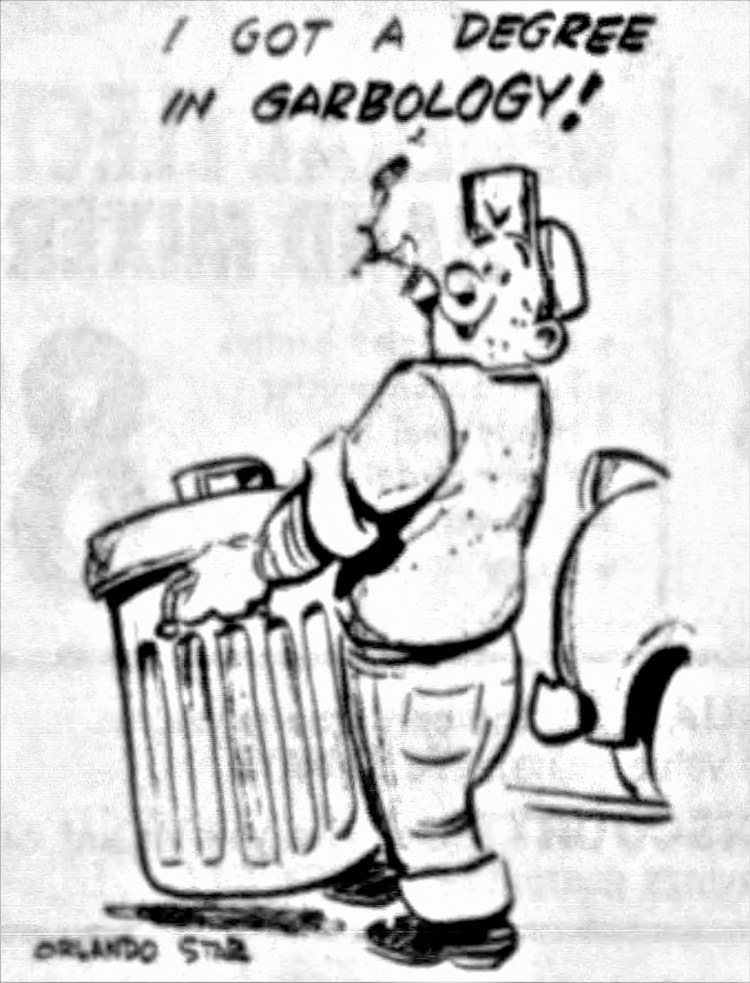
a person whose job is to collect domestic refuse—also, an expert in the treatment of refuse—USA, 1946—from ‘garb-’ in ‘garbage’, and the combining form ‘-ologist’
Read MoreAustralia, 1834—used in various phrases, in particular as a type of someone or something in a very bad state or condition—also in the phrase ‘all behind like Barney’s bull’, meaning ‘very delayed’ or ‘backward’—origin unknown
Read MoreAustralia—also ‘to bang like a shithouse door’—used of an exceptional sexual partner—plays on two meanings of the verb ‘bang’: ‘to make a loud noise’ and ‘to have sexual intercourse’
Read MoreAustralia, 1972—a jocular curse—the Australian National Dictionary Centre explains that this phrase “recalls an earlier time when many Australians kept chooks (domestic chickens) in the backyard and the dunny was a separate outhouse”
Read More
