1777, in a translation of a letter written by Voltaire in 1768—a loan translation from French ‘l’histoire n’est qu’une fable convenue’, first used in 1758 by the French philosopher Claude Adrien Helvétius
Voltaire revived the use of ‘désappointer’ in the sense ‘to frustrate the expectation or desire of (a person)’ with reference to this use of the English verb ‘disappoint’.
‘to plough a lonely furrow’, or ‘one’s own furrow’ (UK, 1901): to carry on without help, support or companionship—French ‘creuser son sillon’ (‘to dig one’s own furrow’, first used by Voltaire): to carry out with courage and perseverance the task undertaken
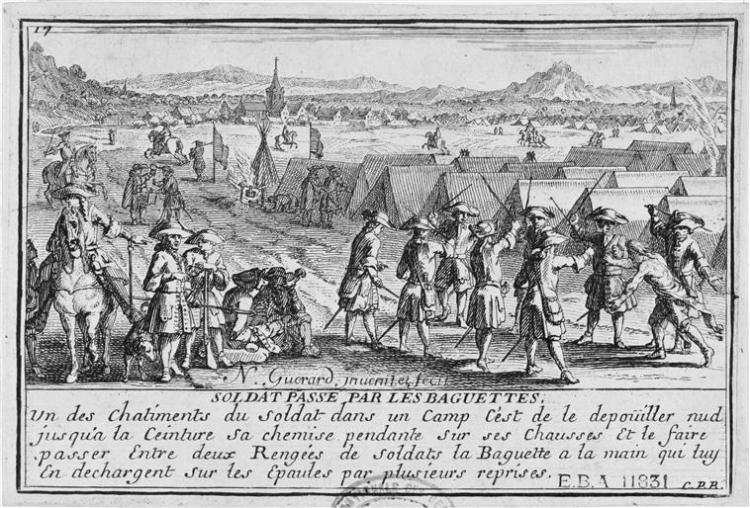
SOLDAT PASSE PAR LES BAGUETTES. Un des chatiments du soldat dans un camp c’est de le depouiller nud jusqu’a la ceinture sa chemise pendante sur ses chausses et le faire passer entre deux Rengées […]
The noun serendipity denotes the faculty of making by accident discoveries that are both fortunate and unexpected. (It has been borrowed into Spanish as serendipia, into Italian as serendipità, and into French as sérendipité.) It was coined by the English writer and politician Horace Walpole (1717-97). In a letter that he wrote to his friend Horace Mann […]
The phrase ‘pour encourager les autres’ (‘in order to encourage the others’) was coined by Voltaire with reference to the execution of Admiral John Byng in 1757.

 word histories