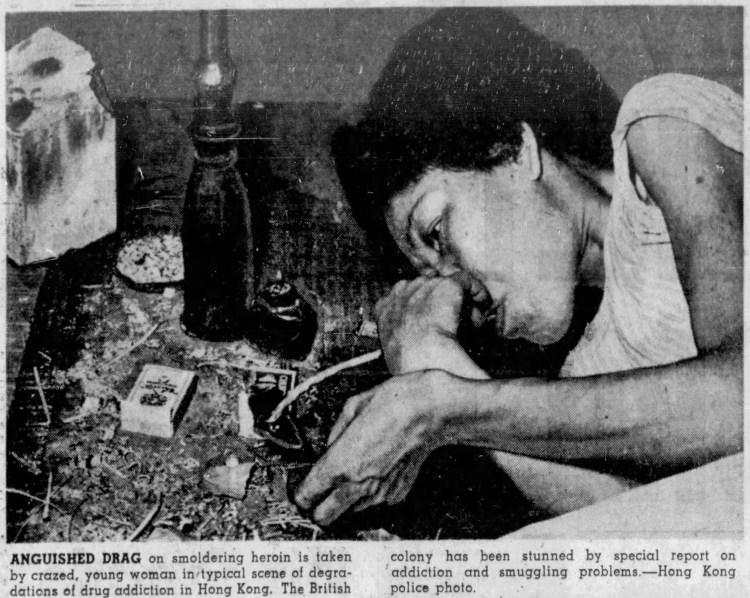
to take heroin by heating it and inhaling the fumes, which form a pattern resembling the tail of a dragon—originated in Hong Kong in the 1950s as a translation of Cantonese slang ‘chui lung’, ‘dragon chasing’
USA, 1977—to be mentally stable—usually depreciatively in negative contexts, as ‘not to have both oars in the water’—refers to the necessity of dipping both the oars into the water to keep a rowing boat steady and steer it in a straight line
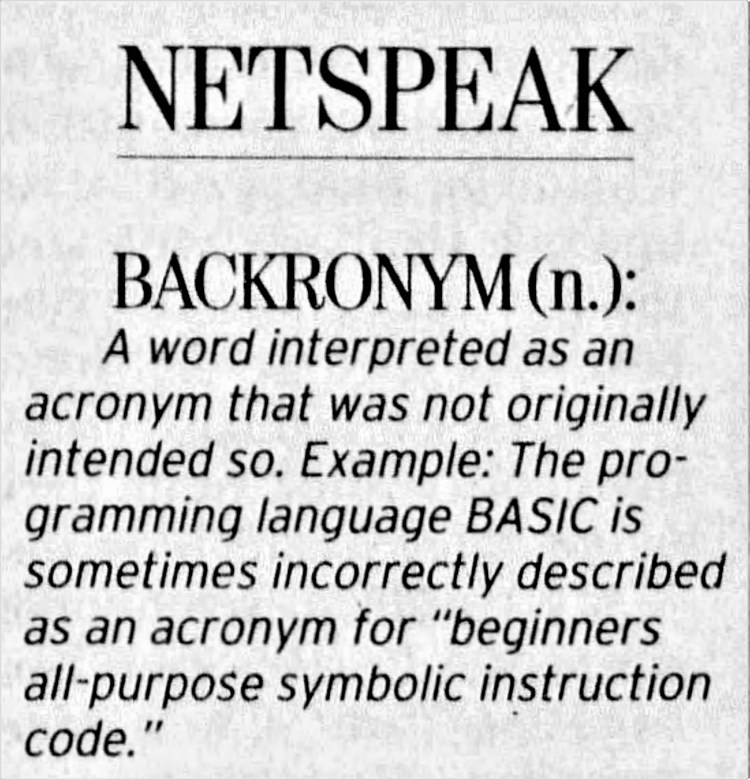
USA, 1983—an acronym deliberately formed from a phrase whose initial letters spell out a particular word or words, either to enhance memorability or as a fanciful explanation of a word’s origin—blend of the adjective ‘back’ and of the noun ‘acronym’
USA—1940: a policy of non-acceptance with regard to a specified situation, activity, result, substance, etc.—1971: a policy of non-acceptance with regard to abusive, anti-social or criminal behaviour, especially the use of illegal drugs
a sample text beginning with ‘lorem ipsum’, based on jumbled elements from Cicero’s De Finibus Bonorum et Malorum—‘lorem ipsum’: arbitrary clipping of the first syllable of ‘dolorem ipsum’ in Cicero’s text
UK, 1836—a person, country, etc., that appears powerful or threatening but is actually weak or ineffective—from Chinese ‘zhǐlǎohǔ’ (‘zhǐ’, paper, ‘lǎohǔ’, tiger)—used in the post-war years by the Chinese Communist Party of the USA and other reactionaries
1909 to 1923 in stories by English author P. G. Wodehouse—a facetious appellation for a home or hospital for people with mental illnesses—‘loony’: shortened form of ‘lunatic’
USA, 1889—when a situation reaches a critical point and one must commit oneself to an action or decision—the image is of having to shove when mere pushing is ineffective
American English—a surge of extremely cold air which causes rapid falls in temperature and severe wintry weather in central and eastern areas of the United States and Canada—after ‘Trans-Siberian Express’, the name of a railway running from Moscow to Vladivostok on the Sea of Japan
UK, 1808—to make one’s beliefs or intentions plain—from the former practice of nailing an ensign to the mast of a ship, after damage during battle resulted in the ship’s colours no longer being clearly displayed, which otherwise might have been interpreted as a signal of surrender



 word histories