‘Hollywood ending’: meanings and origin
USA, 1927—a conventional film ending, regarded as sentimental or simplistic, and often featuring an improbably positive outcome—by extension: an improbably positive outcome to a real-life situation
Read More
“ad fontes!”
USA, 1927—a conventional film ending, regarded as sentimental or simplistic, and often featuring an improbably positive outcome—by extension: an improbably positive outcome to a real-life situation
Read MoreUSA, 1992—to reduce staff numbers to levels so low that work can no longer be carried out effectively—portmanteau, coined by the Trends Research Institute, combining the adjective ‘dumb’, meaning ‘stupid’, and the verb ‘downsize’
Read MoreUSA, 1883—deliberate transposition of the initial consonants of ‘plot’ and ‘thickens’ in ‘the plot thickens’—‘the plot thickens’, attested in 1672, means: the storyline becomes more complex or convoluted
Read MoreUK, 1890—USA, 1899—the humorous phrase ‘the nineteenth hole’ denotes the bar room in a golf clubhouse, as reached at the end of a standard round of eighteen holes
Read MoreUSA, 1936—the facts about sexual reproduction, especially as explained to a child—when this phrase appeared, ‘birds’ and ‘bees’ had long been commonly paired in literary allusions
Read More1980s—to become wildly or explosively angry; to become highly excited or enthusiastic; to intensify rapidly and especially alarmingly—refers to the failure of a guided missile’s guidance system (1966)
Read MoreUSA, 1953—value for money, return on an investment—originally used of military spending on nuclear weapons—‘bang’ denotes a nuclear explosion, ‘buck’ denotes a dollar
Read MoreUSA—‘asphalt jungle’ 1920—‘concrete jungle’ 1924—designate a city or urban area which has a high density of large, unattractive, modern buildings and is perceived as an unpleasant living environment
Read MoreUSA, 1855—used of a situation in which it is difficult to distinguish cause and effect—refers to the traditional problem of which came first, the chicken (to lay the egg) or the egg (to produce the chicken)
Read More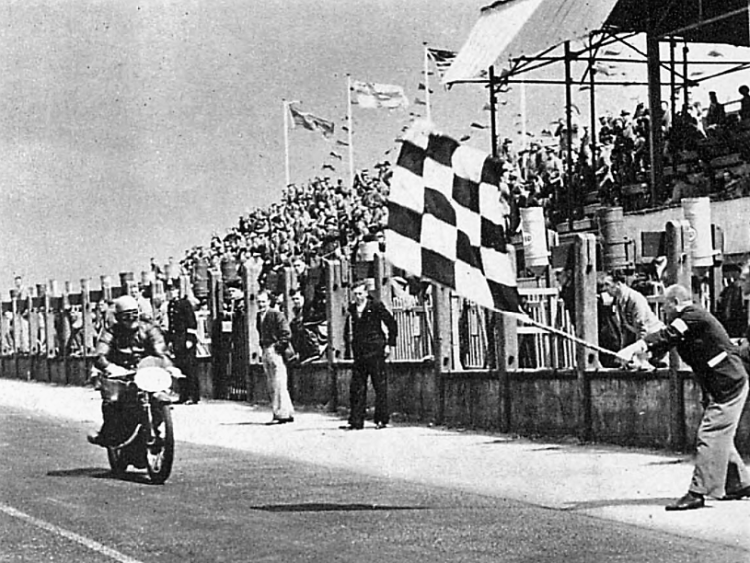
USA, 1923—in motorsports: to win a race—refers to ‘checkered flag’, denoting a flag with a black-and-white checkered pattern, displayed to drivers at the end of a race
Read More word histories