‘short-arm inspection’: meaning and origin
USA, 1917—originally and chiefly military slang—an inspection of the penis for venereal disease or other infection—the image is of the penis as an additional, but shorter, limb
Read More
“ad fontes!”
USA, 1917—originally and chiefly military slang—an inspection of the penis for venereal disease or other infection—the image is of the penis as an additional, but shorter, limb
Read More‘serious trouble’—USA, 1866—from the image of taking off one’s shirt before getting into a fight, and from ‘hell’ in the sense of ‘a severe reprimand’, as in ‘to give someone hell’
Read Moreused of a person who is frozen with fright or surprise, or is trying to flee, as a result of suddenly becoming the focus of attention—alludes to the habit of deer and rabbits of stopping still when dazzled by the headlights of a motor vehicle, or of running away within the headlight beam
Read MoreUK, 1934—used of a person regarded as physically unattractive or sexually undesirable
Read More‘femiphobia’ (USA) 1907—‘feminophobia’ (UK) 1914—an irrational fear or dislike of women—from Latin ‘fēmina’ (woman) and combining form ‘-phobia’—probably each coined on various occasions by different persons, independently from each other
Read More1932—coined after ‘croque-monsieur’—a toasted or fried sandwich filled with ham and cheese and topped with a poached or fried egg—but originally denoted any of various types of toasted or fried sandwich
Read More
the beard growth which becomes visible in the late afternoon on the face of a man who has shaved earlier in the day—originally (USA, 1937) the catchline of an advertising campaign for Gem Micromatic Razor and Blades
Read More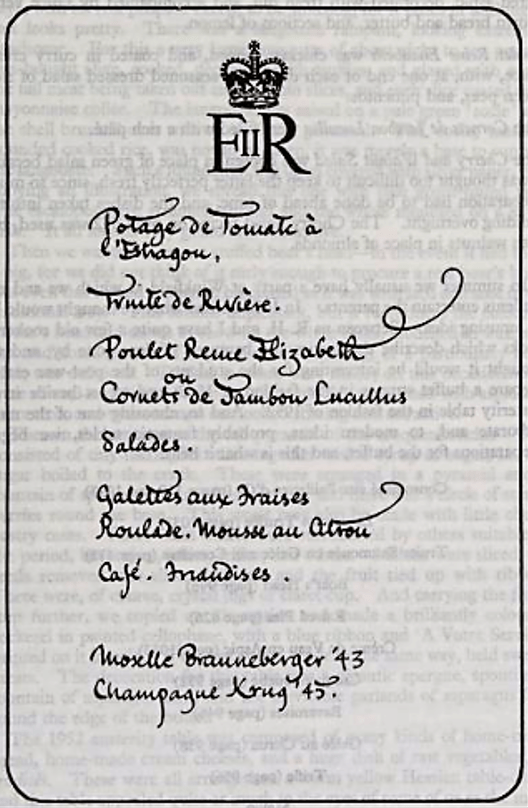
a dish of cold cooked chicken served in a mild creamy curry sauce—so named because created for a lunch held to mark the coronation of Queen Elizabeth II in June 1953, at which it was called ‘Poulet Reine Elizabeth’—also USA, April 1953: a dish created when the Poultry and Egg National Board organised Coronation Chicken Day
Read MoreUSA, 1888—used as a way of telling someone that they will have to accept a situation they do not like because they have no choice—the noun ‘titty’ denotes a teat, and, in the phrase, the image is of sucking a tough teat
Read Morecompromising information collected for use in blackmailing, discrediting or manipulating a person, group, etc.—borrowed from Russian (Soviet secret police) ‘kompromat’, from ‘kompro-’ in ‘komprometirujuščij’, meaning ‘compromising’, and ‘mat-’ in ‘material’, meaning ‘material’
Read More word histories