‘milk moustache’: meaning and early occurrences
also ‘moustache of milk’—UK, 1872—a white residue, resembling a growth of hair above the upper lip, left after drinking milk
Read More
“ad fontes!”
also ‘moustache of milk’—UK, 1872—a white residue, resembling a growth of hair above the upper lip, left after drinking milk
Read MoreUSA, 1888—at variance/in line with the (likely) thought, practice or judgement of the future; at odds/coincident with how commentators view (or are likely to view) an issue or action retrospectively
Read More1777, in a translation of a letter written by Voltaire in 1768—a loan translation from French ‘l’histoire n’est qu’une fable convenue’, first used in 1758 by the French philosopher Claude Adrien Helvétius
Read MoreU.S. slang, 1986—a march into or out of a police car, courthouse, etc., that a person in police custody is made to perform for the benefit of the news media—‘perp’: shortening of ‘perpetrator’
Read MoreUK, 1822—a vituperative gossip, a scandalmonger; an evil or malicious tongue—a borrowing from French ‘mauvaise langue’ (literally ‘bad tongue’) of same significations
Read Moreone who rides a surfboard with the right foot forward instead of the left—USA, 1960 (as a verb)—here, ‘goofy’ seems to be related to prejudice against left-handedness and left-footedness
Read MoreUSA, 1937—informative material presented in an entertaining way at working-meetings (and later at other types of gatherings) organised by Shell Oil Company—a blend of ‘information’ and ‘entertainment’
Read More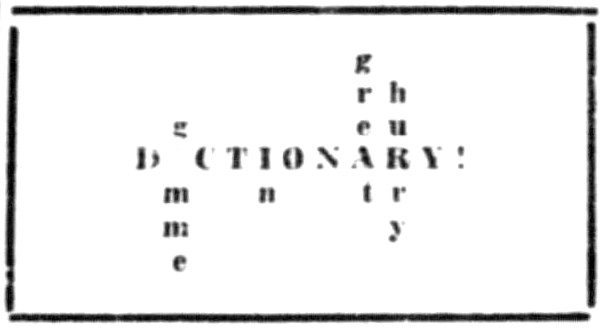
the style of language considered characteristic of crossword clues or solutions—USA, 1925—from the noun ‘crossword’ and the suffix ‘-ese’, forming nouns designating the style of language considered characteristic of the first element
Read Morelate 18th century, in the context of piracy: to walk along a plank placed over the side of a ship until one falls into the sea—hence, figuratively, early 19th century: to be forced to resign from one’s office or position
Read More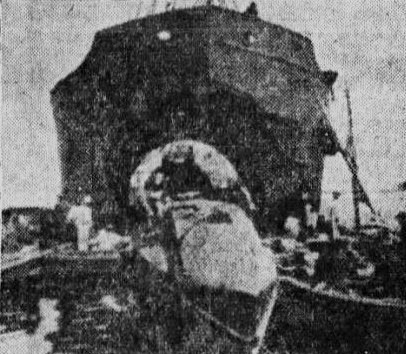
1910s—a ship designed to carry submarines—likens the submarines carried in such ships to the immature young nursed in the abdominal pouch of female kangaroos
Read More word histories