USA, 1939—‘there is’, or ‘ain’t’, ‘no such thing as a free lunch’: everything inevitably involves a cost of some kind—literal meaning of ‘free lunch’ (first half of the 19th century): a lunch provided free of charge in a bar, saloon, etc., as a means of attracting customers
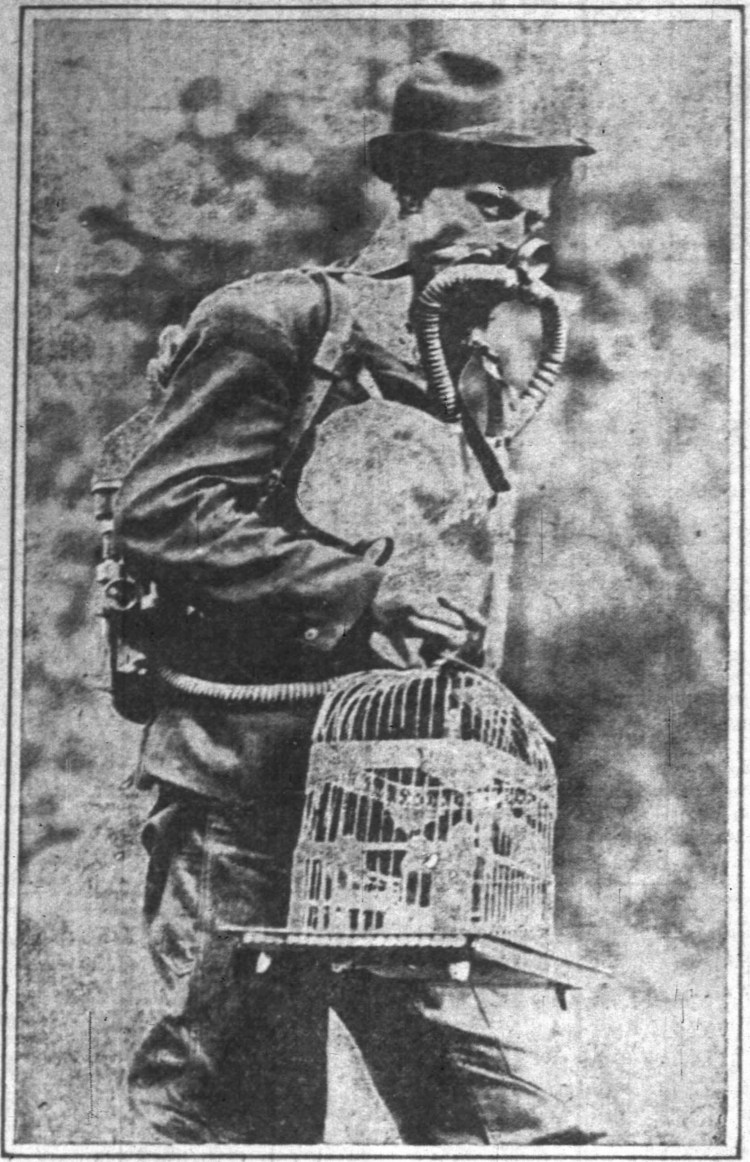
USA, 1964—‘canary in the coal mine’: an early indicator of potential danger or failure—from the former practice of taking live canaries into coal mines to test for the presence of toxic gases, the illness or death of the canaries serving as an indication that such gases were present
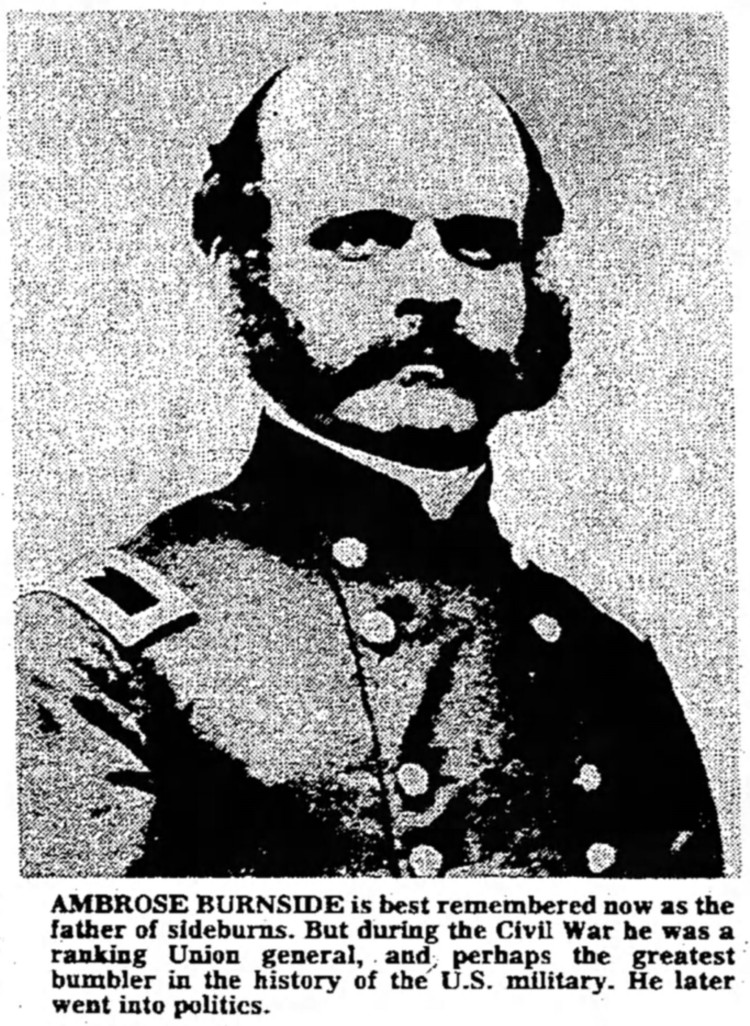
After Ambrose Burnside, Union general in the U.S. Civil War, ‘burnsides’ (1866) denotes thick side whiskers worn with a moustache and clean-shaven chin; on the pattern of ‘side whiskers’, it was altered to ‘sideburns’ (1875), itself altered to ‘sideboards’ (1882).
coined by Thomas Jefferson in Notes on the State of Virginia, first published in Paris in 1785—literal meaning: ‘to make little’ (composed of the prefix ‘be-’ and the adjective ‘little’)—criticised in The European Magazine, and London Review of August 1787 when the book was published in London
The noun ‘wolf whistle’ appeared in the USA in 1943—Wolf-whistling was popularised by the wolf, a cartoon character created by Tex Avery in Little Red Walking Hood (1937), which reappeared in Red Hot Riding Hood (1943).
USA, 1795—Probably a blend of ‘irrespective’ and ‘regardless’, ‘irregardless’ means the same as ‘regardless’. It is regarded as incorrect in standard English, because the negative prefix ‘ir-’ merely duplicates the suffix ‘-less’, and is therefore unnecessary.
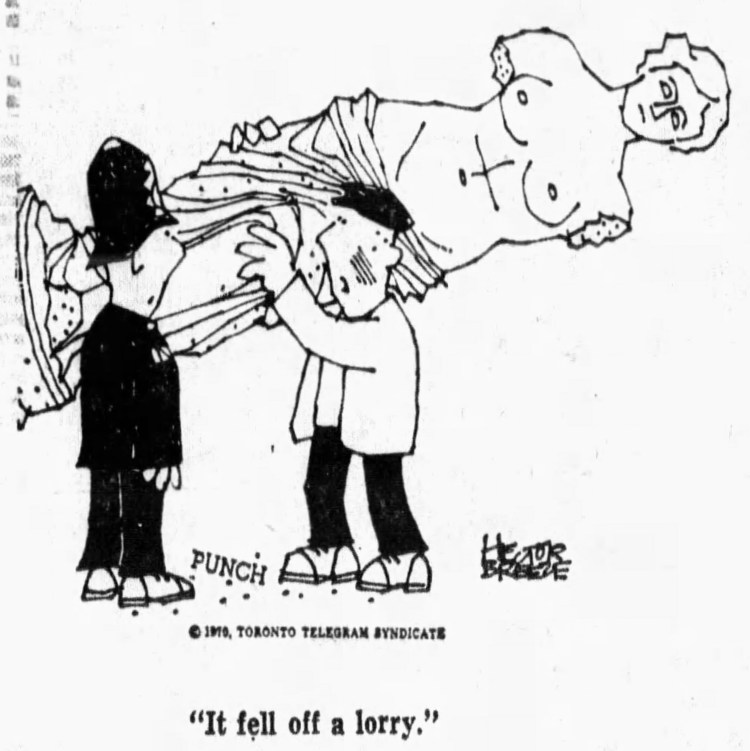
UK, 1953, humorous and euphemistic—‘to fall off (the back of) a lorry’: of goods, ‘to be acquired in dubious or unspecified circumstances’, especially ‘to be stolen’—variant with ‘truck’ came into use later in Australian and North American English
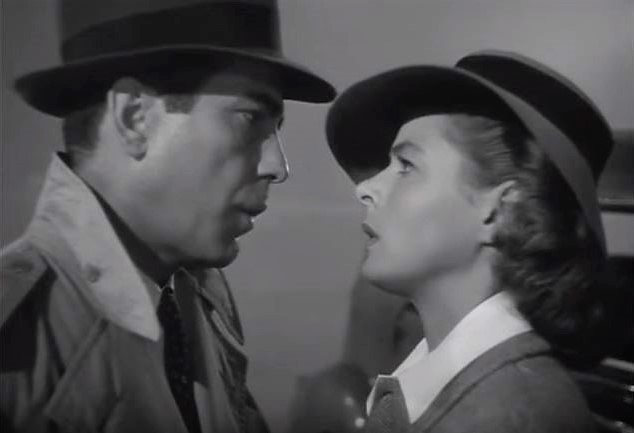
USA, 1871—The phrase ‘here’s looking at you’ is used as a toast in drinking. It is now widely associated with the American film Casablanca (1942), in which Humphrey Bogart addresses Ingrid Bergman with the words “Here’s looking at you, kid.”
USA, 1811—based on the three principal components that make up a flintlock gun: ‘lock’ denotes the firing mechanism, ‘stock’ the handle or wooden shoulder-piece to which it is attached, and ‘barrel’ the tube down which the bullet is fired
to create trouble or a commotion—USA, 1840—a euphemism for synonymous phrases such as ‘to raise the Devil’ and ‘to raise hell’—from the name of the eldest son of Adam and Eve and murderer of his brother Abel

 word histories