‘grumpy-drawers’: meaning and origin
a bad-tempered, sullen person—UK, 1981—here, the noun ‘drawers’ means ‘underpants’
Read More
“ad fontes!”
a bad-tempered, sullen person—UK, 1981—here, the noun ‘drawers’ means ‘underpants’
Read Moreeveryone is accountable for their own actions—17th century—may refer to herrings being hung when up for sale (that is to say: every piece of merchandise must sell on its own merits)
Read Morecrowded or confined tightly together—Britain, 1706—in early use, this phrase often referred to the transatlantic slave trade
Read Moresaid of a great number of persons or things, especially when pressed against one another—UK, 1776—refers to herrings in a barrel
Read More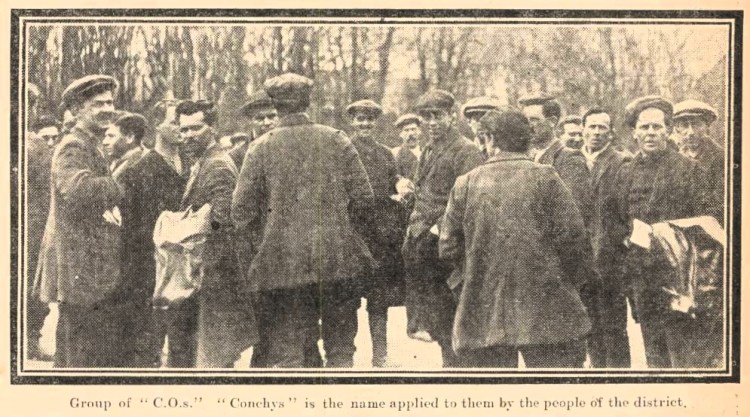
a conscientious objector—UK, 1916—from the initial syllable of the noun ‘conscientious objector’ and the suffix ‘-ie’, used to form familiar diminutives
Read MoreUK, 1931—sports (originally golf): a style of play characterised by an emphasis on luck rather than skill—the image is of a golfer who trusts to luck when hitting the ball
Read More1901—a look inviting sexual interest—hence, the adjective ‘bedroom-eyed’ (1925), which means: giving a look inviting sexual interest
Read Moreoriginally (1830): the rule, or the power, of paper money (as opposed to metallic currency)—later also (1940): the rule, or the power, of bureaucracy
Read More(intransitive): to spend the summer—UK, 1797, in the following title: The Sea Side, a Poem, in a Series of familiar Epistles, from Mr. Simkin Slenderwit, summerising at Ramsgate, to his dear Mother in Town
Read Morevery boring or unexciting—‘(as) dull as ditchwater’ (1770)—the later phrase ‘(as) dull as dishwater’ (1832) is probably due to mispronunciation of ‘ditchwater’ in the original phrase
Read More word histories