‘chain-smoker’: meaning and origin
1885—a person who smokes continually, typically by lighting a cigarette from the stub of the last one smoked—loan translation from German ‘Kettenraucher’—originally referred to Otto von Bismarck
Read More
“ad fontes!”
1885—a person who smokes continually, typically by lighting a cigarette from the stub of the last one smoked—loan translation from German ‘Kettenraucher’—originally referred to Otto von Bismarck
Read MoreUK, 1900—to rain very heavily—‘stair rod’: a rod for securing a carpet in the angle between two steps
Read More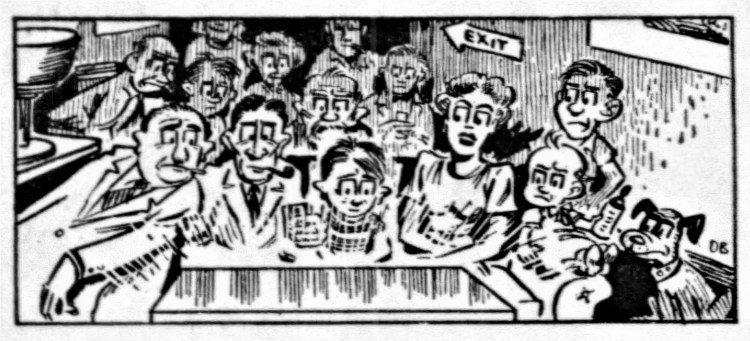
‘square eyes’ 1955: eyes fancifully imagined as made square by habitual or excessive television viewing; a person characterised as watching too much television—‘square-eyed’ 1953: affected by, or given to, excessive viewing of television
Read MoreUSA, 1883—deliberate transposition of the initial consonants of ‘plot’ and ‘thickens’ in ‘the plot thickens’—‘the plot thickens’, attested in 1672, means: the storyline becomes more complex or convoluted
Read MoreBritish and Irish English, 1833—denotes qualified pleasure—also: ‘to give [someone] a poke in the eye (with a — stick)’, meaning to deprecate [someone]—from ‘a poke in the eye’, denoting something undesirable
Read MoreUK, 1965—in sports such as rugby and soccer: a pass to a player likely to be tackled heavily as soon as the ball is received—the implication is that the player who receives the ball may end up in hospital, or, at least, be injured
Read MoreUK, 1890—USA, 1899—the humorous phrase ‘the nineteenth hole’ denotes the bar room in a golf clubhouse, as reached at the end of a standard round of eighteen holes
Read More1980s—to become wildly or explosively angry; to become highly excited or enthusiastic; to intensify rapidly and especially alarmingly—refers to the failure of a guided missile’s guidance system (1966)
Read MoreUK, 1828—sleep, especially taken before midnight, assumed to be necessary to keep one looking healthy and attractive; any extra sleep—sleep taken before midnight is popularly thought to be most restful
Read MoreUK, 1847—obviously not present where one/it should be—popularised in 1859 by the British statesman John Russell—alludes to the Annals, Book III, 76, by the Roman historian Tacitus
Read More
