‘Hooray Henry’: meaning and origin
a lively but ineffectual young upper-class man—UK, 1959—apparently coined in the 1950s by the British jazz manager James Godbolt after ‘Hoorah Henry’, coined in 1936 by the U.S. author Alfred Damon Runyon
Read More
“ad fontes!”
a lively but ineffectual young upper-class man—UK, 1959—apparently coined in the 1950s by the British jazz manager James Godbolt after ‘Hoorah Henry’, coined in 1936 by the U.S. author Alfred Damon Runyon
Read MoreAustralia, 1834—used in various phrases, in particular as a type of someone or something in a very bad state or condition—also in the phrase ‘all behind like Barney’s bull’, meaning ‘very delayed’ or ‘backward’—origin unknown
Read Morea country characterised by absurdity—originally used of Czechoslovakia—the suffix ‘-istan’ (in country names such as ‘Pakistan’) is used as the second element in satirical names denoting, in particular, ‘a country characterised by [the first element]’
Read Moresuicide committed by a person, especially a child or young adult, as a result of being bullied—blend of the nouns ‘bully’ and ‘suicide’—coined since 2001 on separate occasions by various persons, independently from one another
Read MoreThe proverbial phrase ‘if it should rain pottage, he would want his dish’, and its many variants, are used of a person who is characterised by bad luck or by an inability to be organised or prepared.
Read More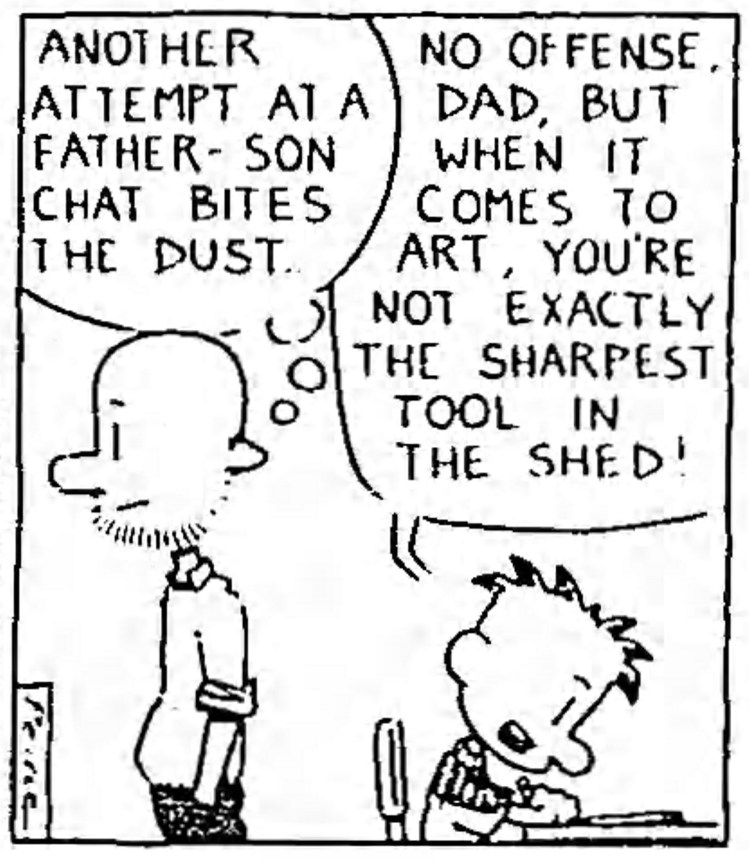
The adjective ‘sharp’ is colloquially used in the superlative, in various phrases of the form ‘not the sharpest —— in the ——’, indicating that a person is not very intelligent or perceptive, especially in comparison to others.
Read MoreUK, 1866—used as an observation, a reproof or a warning implying over-cleverness—plays on two meanings of the adjective ‘sharp’: a) literal meaning: ‘cutting’; b) figurative meaning: ‘keen-witted’
Read Moreused of a person who is implicated in an activity but accepts no responsibility for it—it was used in particular during the Watergate scandal by Senator William Saxbe to characterise President Richard Nixon
Read Morediarrhoea suffered by travellers, especially in Egypt—1915, British Army—the word ‘gyppy’ is from ‘gyp’ in ‘Egyptian’, and the suffix ‘-y’, used to form familiar diminutives
Read Moreto vomit, especially from drunkenness—slang, obsolete—1609 as ‘to jerk the cat’—perhaps alludes to the fact that cats are prone to vomit—cf. also the obsolete French verb ‘renarder’, to vomit, from the noun ‘renard’, denoting a fox
Read More
