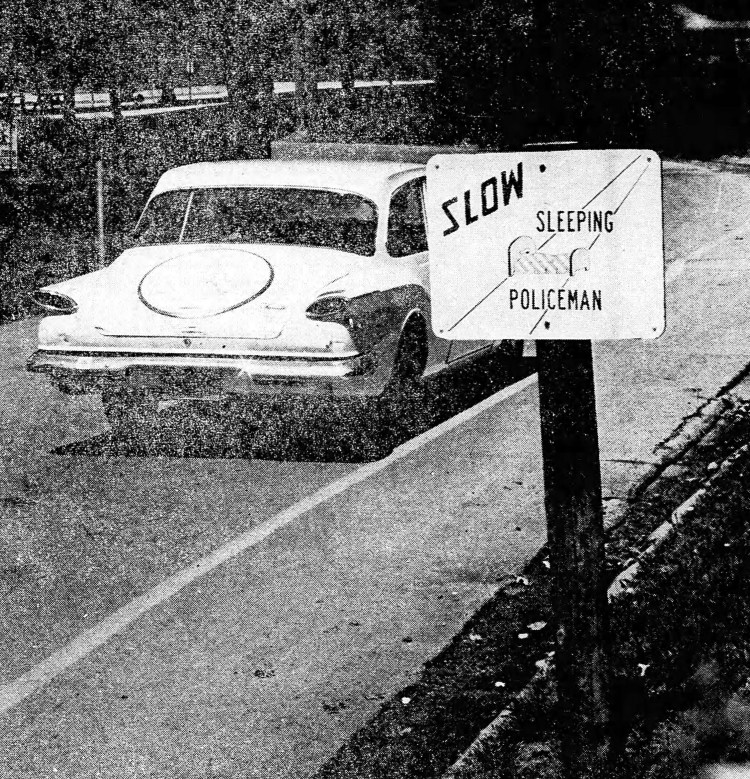
a raised band across a road, designed to make motorists reduce their speed—1961—based on the image of a policeman lying asleep in the middle of a road—in early use often with reference to Jamaica
‘to snatch victory from the jaws of defeat’: to win a battle, contest, etc., when defeat seemed inevitable—‘to snatch defeat from the jaws of victory’: to be defeated in a battle, contest, etc., when victory seemed inevitable
a film which fails to achieve the commercial success that was expected—UK, 1986—from ‘flop’ (a failure) and ‘-buster’ in ‘blockbuster’ (a film which achieves great commercial success)
USA, 1854—the experience of life regarded as a means of instruction, in contrast to formal (higher) education—now often used with the implication that life experience is of greater benefit than formal education
1691—to expose the flaws in something such as a law, a policy, an argument or a belief—these flaws are likened to holes large enough to drive a coach and horses through them
a person or thing, initially ugly or unpromising, that changes into something beautiful or admirable—New Zealand, 1848—from Hans Christian Andersen’s story about a supposed ugly duckling that turns out to be a swan
absenteeism among police officers (and by extension other workers) who claim to be ill but are in fact absent to support union contract demands or negotiations—USA, 1967—alludes to the traditional colour of police uniforms

 word histories