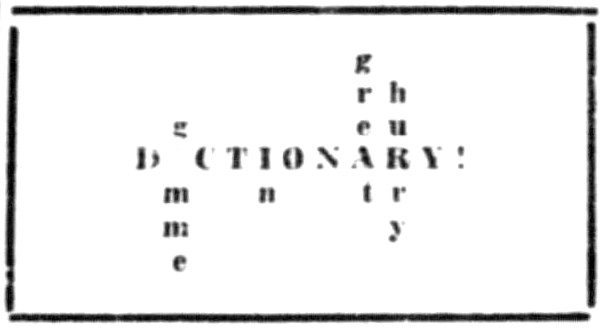
the style of language considered characteristic of crossword clues or solutions—USA, 1925—from the noun ‘crossword’ and the suffix ‘-ese’, forming nouns designating the style of language considered characteristic of the first element
late 18th century, in the context of piracy: to walk along a plank placed over the side of a ship until one falls into the sea—hence, figuratively, early 19th century: to be forced to resign from one’s office or position
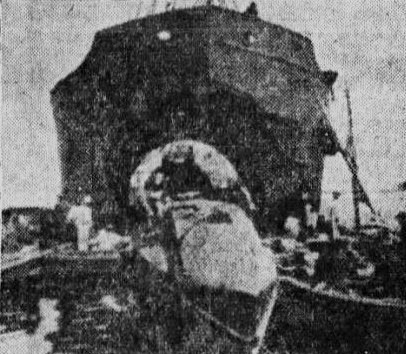
1910s—a ship designed to carry submarines—likens the submarines carried in such ships to the immature young nursed in the abdominal pouch of female kangaroos
a game in which players must obey a leader’s instructions if, but only if, they are prefaced with the words ‘O’Grady says’—UK, 1917—game invented during World War One as a play-way for conducting physical exercises and drill in the British Army
the earliest occurrences of ‘feet of clay’, used without explicit reference to the Bible, date from the French Revolution (1789-1799) and translate French ‘pieds d’argile’
music characterised by excessive or extravagant riffing—USA, 1975—from ‘riff’ (a short repeated musical phrase) and ‘-orama’ (used to form nouns designating a display, event, etc., of considerable size or expanse)
early 19th century—pandemonium, great trouble or difficulty—often in ‘to kick up hell’s delight’, meaning: to cause a great deal of trouble or difficulty
1933—a generally accepted notion or opinion—borrowed from French ‘idée reçue’ (i.e., ‘received idea’)—originally with reference to ‘Dictionnaire des idées reçues’, by Gustave Flaubert
refers to a person who is ignorant or dismissive of the hardships of others—alludes to the phrase “let them eat cake”, attributed to Marie Antoinette, wife of King of France Louis XVI