‘(as) mad as a (cut) snake’: meaning and origin
out of one’s mind, extremely annoyed—Australia, 1900; New Zealand, 1907—originally as ‘(as) mad as a snake’, ‘(as) mad as snakes’ and variants—later as ‘(as) mad as a cut snake’
Read More
“ad fontes!”
out of one’s mind, extremely annoyed—Australia, 1900; New Zealand, 1907—originally as ‘(as) mad as a snake’, ‘(as) mad as snakes’ and variants—later as ‘(as) mad as a cut snake’
Read MoreUSA, 1959—a very tidy, well-organised person—a blend of the adjective ‘neat’ and of the noun ‘beatnik’—originally occurred chiefly in contrast to ‘beatnik’
Read MoreIn British English, the noun ‘porky’ (also ‘porkie’) is short for ‘porky pie’ (also ‘porkie pie’), which is an alteration of ‘pork pie’, rhyming slang for the noun ‘lie’.
Read Morea situation that has been completely mismanaged—from ‘omni-’ and ‘shambles’—coined by Tony Roche in the British television series The Thick of It (3rd series, episode 1, 24 October 2009)
Read More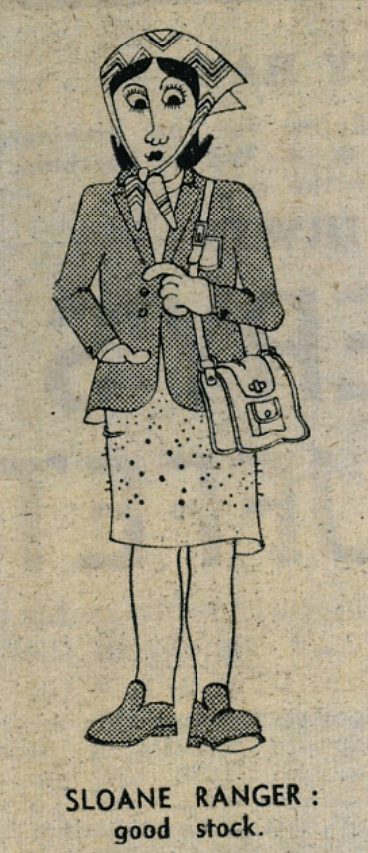
UK, 1975—an upper-class and fashionable, but conventional, young woman in London—blend of ‘Sloane Square’, the name of a square located in an affluent area of London, and ‘Lone Ranger’, the name of a well-known hero of western stories and films
Read MoreUK, 1912—humorous: a Jewish person—refers to the Crossing of the Red Sea, as recounted in the Book of Exodus—coined on various occasions by different persons, independently from each other
Read More
USA, 1978—a young woman or teenage girl who is regarded as sexually attractive, but unintelligent or frivolous—from ‘bimbo’ and the suffix ‘-ette’
Read MoreUK (Midlands), 1939—exclamative phrase used to express astonishment or incredulity—the reason that this metaphor was chosen is unknown
Read MoreUK, 1970—colloquial expression denoting a period in a broadcasting schedule regularly reserved for religious programmes
Read Morea nickname given to London, which has, since the collapse of the Soviet Union, attracted Russian oligarchs—also used earlier in reference to Communism—modelled on Russian city names such as ‘Leningrad’ and ‘Stalingrad’
Read More word histories