a police patrol car—UK, 1959—originally any of the special crime police patrol cars used in Lancashire—from the radio call-sign ‘Z’ allotted to such cars—popularised by the British television series ‘Z Cars’ (1962-78)
British slang, 1960s—‘to disappear up one’s own arse’: to become self-involved, pretentious or conceited—‘to be up one’s own arse’: to be self-involved, pretentious or conceited
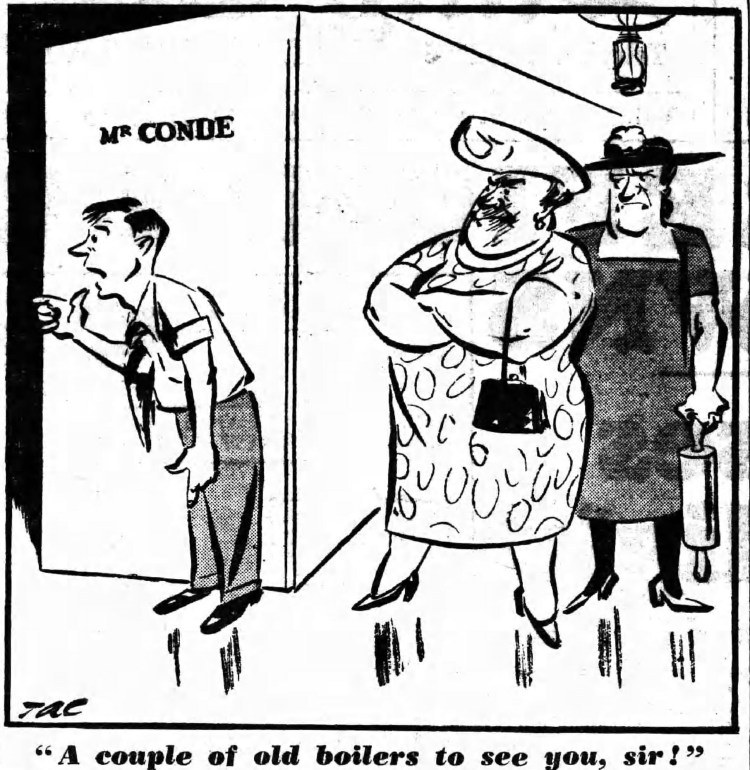
Australia, 1950—UK, 1962—derogatory and offensive: a middle-aged or elderly woman, especially one who is unattractive or unfeminine—refers to ‘boiler’, i.e., a tough old chicken for cooking by boiling
the discipline of moving rapidly and freely over or around the obstacles presented by an urban environment by running, jumping, climbing, etc.—French—altered spelling of the noun ‘parcours’ in ‘parcours d’obstacles’ (i.e., ‘obstacle course’)
UK—a trifling, whimsical news item, especially one that is used as a light-note ending to a television or radio news broadcast—from a short film about a pet duck, first broadcast on the BBC on 24 May 1978
UK, 2001: the defeat of a high-profile Member of Parliament, indicating a significant political change—originally, UK, 1997: the announcement of Michael Portillo’s defeat, seen as emblematic of the Conservative defeat in the general election
1990—a street in which many satellite dishes are attached to the front of the buildings—‘satellite dish’: a bowl-shaped antenna used to view satellite television
refer to the teenage years regarded as an age at which jeans are often worn—USA, from 1946 onwards—punningly after, respectively, ‘teenage’, ‘teenager’ and ‘teenaged’
UK, 1981—a pair of spectacles with an oversized frame of a style that was fashionable in the 1980s—refers to the spectacles worn by Deirdre Barlow, a fictional character in the soap opera Coronation Street




 word histories