‘you can’t get the staff these days’: meaning and origin
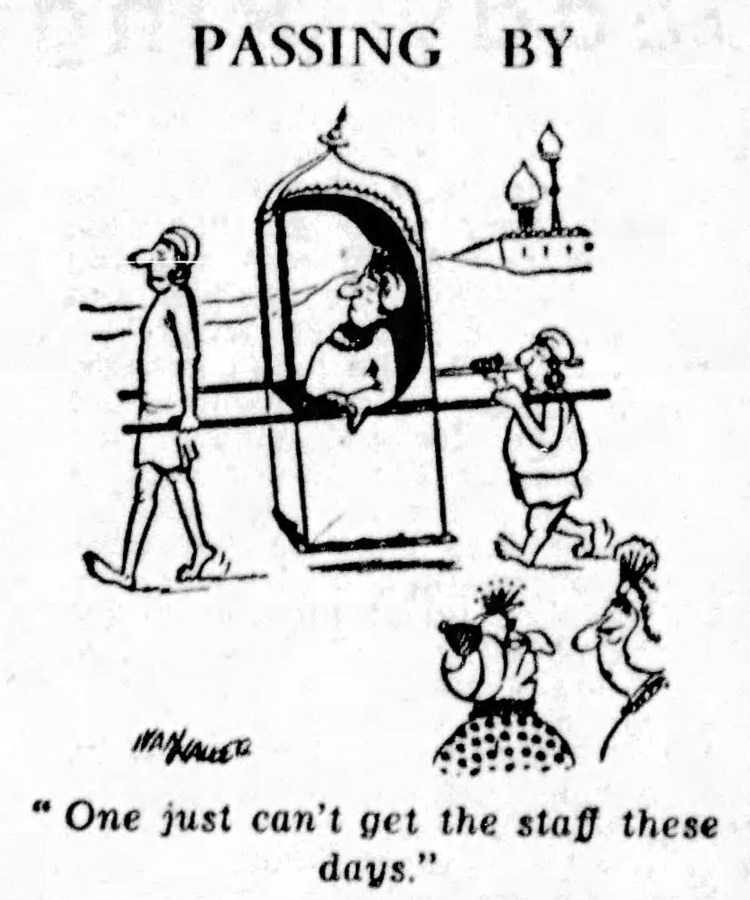
UK, 1957—humorous—indicates that something has not been done or maintained properly, or that someone’s efforts have failed to meet expectations
Read More
“ad fontes!”
UK, 1957—humorous—indicates that something has not been done or maintained properly, or that someone’s efforts have failed to meet expectations
Read MoreUK, late 1980s—the adverb ‘o’clock’ is colloquially and humorously used with adjectives to denote an unreasonably, excessively or inconveniently early or late hour—as in ‘stupid o’clock’, ‘silly o’clock’, etc.
Read More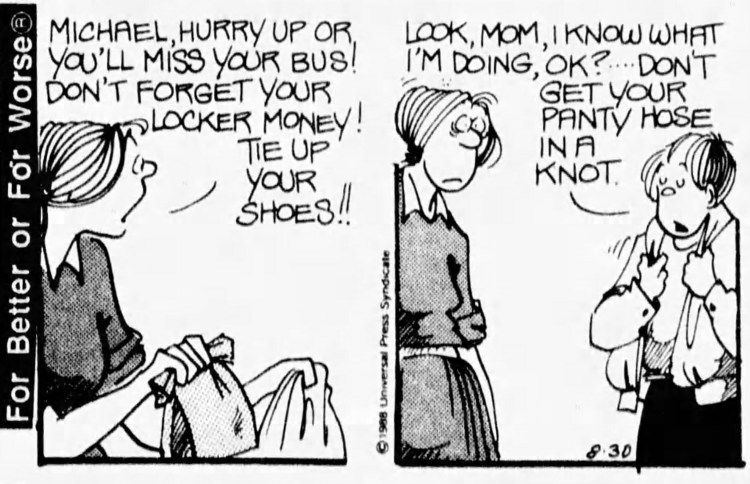
also ‘in a wad’, ‘in a knot’, etc.—to become unduly agitated or angry—the plural noun ‘panties’ refers to short underpants worn by women or girls—American English, 1975
Read Morea Latin-American television soap opera—from American-Spanish ‘tele-’ (in ‘televisión’) and ‘novela’ (‘a novel’)—1959 in American Spanish, 1961 in American English
Read MoreUK, 1904—refers to the action of making someone stop chattering—from the colloquial imperative phrase ‘cut the cackle (and come to the horses)’, meaning: stop talking (and get to the heart of the matter)
Read MoreU.S. slang, 1986—a march into or out of a police car, courthouse, etc., that a person in police custody is made to perform for the benefit of the news media—‘perp’: shortening of ‘perpetrator’
Read MoreUSA, 1937—informative material presented in an entertaining way at working-meetings (and later at other types of gatherings) organised by Shell Oil Company—a blend of ‘information’ and ‘entertainment’
Read Moreconventionally middle-class—UK, 1953—from ‘Mrs Dale’, the name of a conventional middle-class woman in Mrs Dale’s Diary, a BBC radio serial broadcast from 1948 to 1969
Read Morea bad-tempered, sullen person—UK, 1981—here, the noun ‘drawers’ means ‘underpants’
Read MoreUSA, 1982—characteristic, reminiscent or imitative of the films or television work of the U.S. filmmaker David Lynch (1946-2025)—also ‘Lynchean’, ‘David-Lynchian’ and ‘David-Lynchean’
Read More word histories