a person who shows no proficiency in the use of information technology—USA, 1998—from ‘techno-’ in ‘technological’ and ‘technology’, and ‘-saur’ in ‘dinosaur’, i.e., a person who is unable to adapt to change
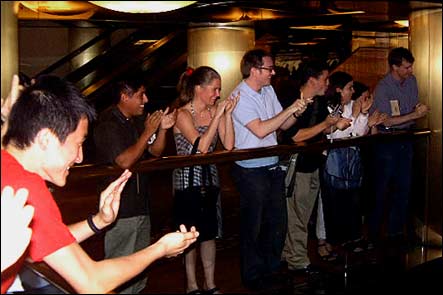
USA, 2003—a group of people organised by means of the internet, mobile phones or other wireless devices, who assemble in public to perform a prearranged action together and then quickly disperse
a person or thing that is insignificant or contemptible—1910—originally (1900): a type of small high-velocity shell, with reference to the high-pitched sound of its discharge and flight
the practice of coasting downhill in a motor vehicle, with the engine disengaged—USA, 1949, lorry-drivers’ slang—one of the phrases in which ‘Mexican’ denotes basic devices or processes compared unfavourably with more advanced equivalents
various meanings, in particular: something with a larger capacity than its outward appearance suggests—UK, 1968—the name, in TV series Doctor Who, of a time machine outwardly resembling a police telephone box, yet inwardly much larger
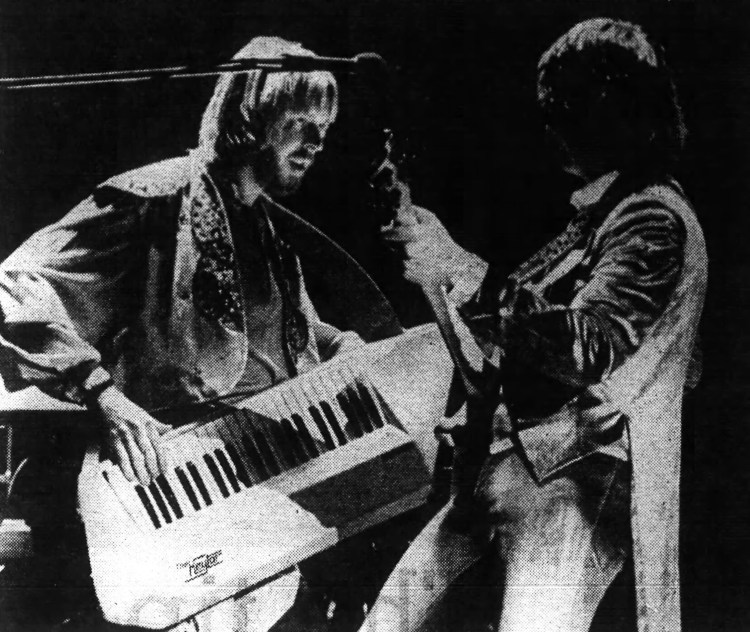
a synthesizer designed to be held in the manner of a guitar, with one hand playing a keyboard while the other operates controls on an extended handle—USA, 1979—from ‘key-’ in ‘keyboard’ and ‘-tar’ in ‘guitar’
a factor speculatively included in a hypothesis or calculation, especially to account for some unquantified but significant phenomenon or to ensure a desired result—USA, 1947
USA—(1957) of computer data: incorrect or poor-quality input will produce faulty output—also applied (1964) to processes likened to computerised data processing
a vehicle which travels on a cushion of air—UK, 1958, apparently coined by engineer Christopher Sydney Cockerell—also, USA, 1958, in the sense of “a flying car”
from the image of a speeding explosive projectile—primary meaning (of a motorcar, an aircraft, a motorcycle, an animal, a person): to move very fast—later (also ‘to go down like a bomb’ and ‘to go down a bomb’): to be very successful or popular





 word histories