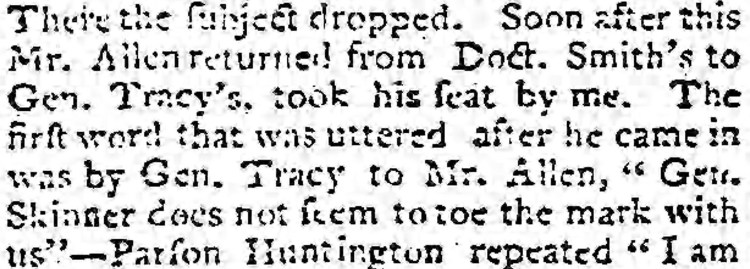
The phrase to toe the line means to accept the authority, policies or principles of a particular group, especially unwillingly. Its literal sense is to stand or crouch with the toes touching the line, especially at the start of a race or fight. The current meaning is an extension of a figurative usage, […]
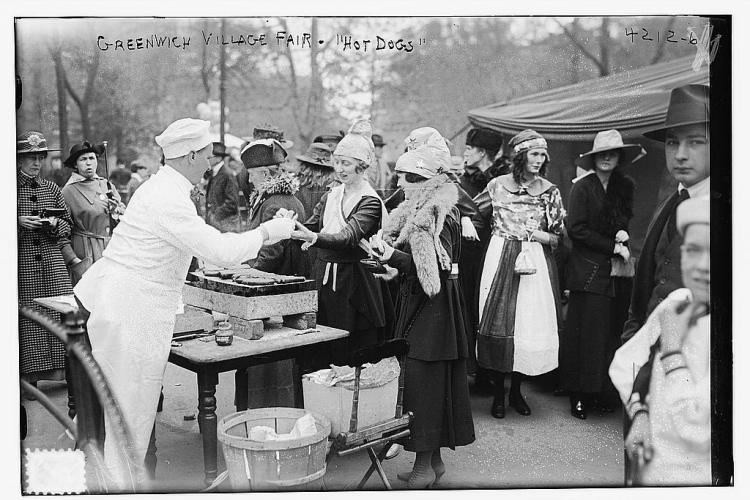
Greenwich Village Fair – “Hot Dogs” – June 1917 photograph: Library of Congress The term hot dog denotes a sausage, especially a frankfurter, served hot in a long roll split lengthways. In US slang, the noun dog has been used to denote a sausage since the late 19th century. This usage is first recorded […]
The phrase to leave no stone unturned means to try every possible course of action in order to achieve something. (The equivalent French phrase has a cosmic dimension since it is remuer ciel et terre, literally, to move heaven and earth.) The image of turning every stone was already proverbial over 2000 years ago in […]
The sandwich (item of food consisting of two pieces of bread with a filling between them) is named after the British statesman John Montagu (1718-92), 4th Earl of Sandwich. It is generally said that the sandwich was invented because he once spent twenty-four hours at the gaming-table without other refreshment than some slices of beef […]
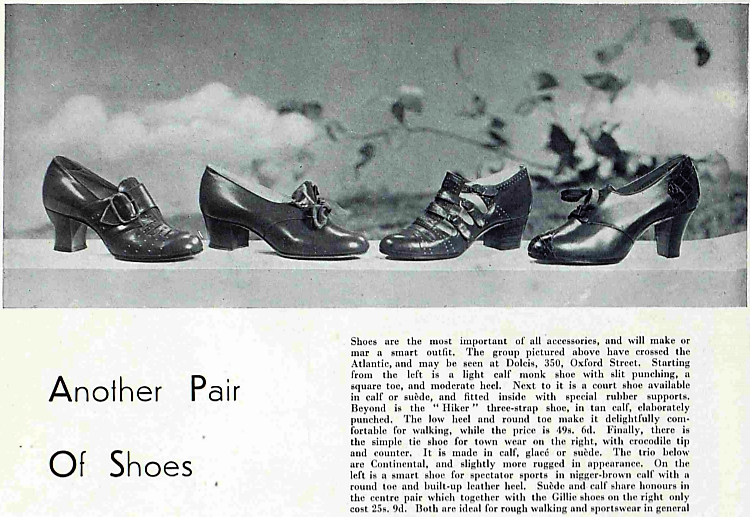
Another Pair Of Shoes Shoes are the most important of all accessories, and will make or mar a smart outfit. The group pictured above have crossed the Atlantic, and may be seen at Dolcis, 350, Oxford Street. Starting from the left is a light calf monk shoe with slit punching, a square toe, and […]
In the USA, cocked hat denoted a game similar to ninepins, except that only three pins were set up, in triangular position. It took its name from cocked hat in the sense of a hat with the brim permanently turned up (i.e. cocked), especially the three-cornered hat of this shape worn at the end […]
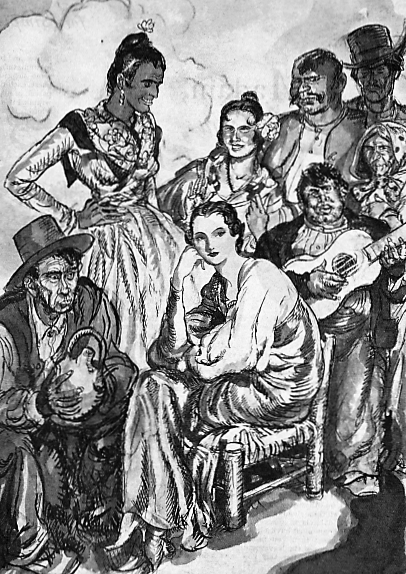
We’ll show her dressed to the nines, posing with a tribe of gypsies in the Pyrenees illustration by Steven Spurrier for The Vanishing Star. A Comedy of Love and Strategy in Hollywood, by Reita Weiman, published in Britannia and Eve (London) of December 1932 The phrase dressed to the nines means dressed […]
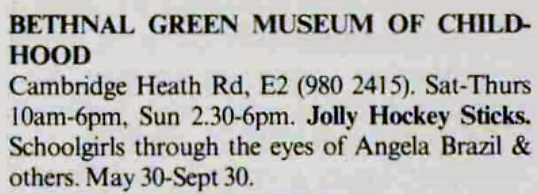
BETHNAL GREEN MUSEUM OF CHILDHOOD Cambridge Heath Rd, E2 (980 2415). Sat-Thurs 10am-6pm, Sun 2.30-6pm. Jolly Hockey Sticks. Schoolgirls through the eyes of Angela Brazil¹ & others. May 30-Sept 30. from The Illustrated London News – May 1984 (¹ Angela Brazil (1868-1947), British author of schoolgirls’ stories) The exclamation jolly hockey stick(s) is […]
Like Jack, pet form of John, Joe, familiar abbreviation of Joseph, is colloquially used as a generic term for a lad, a fellow, a chap. And, like Joe Blow, Joe Citizen, Joe Doakes and Joe Six-Pack in American English, Joe Soap and Joe Bloggs in British English are generic names for an average man. —Cf. also Onion Johnny. These are the earliest […]
The word cheese is from Old English cēse, cȳse, of West-Germanic origin; it is related to its Dutch and German equivalents kaas and Käse respectively. Those words are ultimately derived from Latin caseus, cheese, which is also the origin of: – Spanish queso – Portuguese queijo – regional Italian cacio – Romanian: caș. Based on […]