‘to put on a bit of pudding’: meaning and origin
Australia, 1957—to gain weight around one’s middle
Read More
“ad fontes!”
Australia, 1957—to gain weight around one’s middle
Read MoreUK, 1812—an imaginary functionary humorously supposed to control the state of the weather—also ‘clerk of the weather office’
Read Moreone who rides a surfboard with the right foot forward instead of the left—USA, 1960 (as a verb)—here, ‘goofy’ seems to be related to prejudice against left-handedness and left-footedness
Read More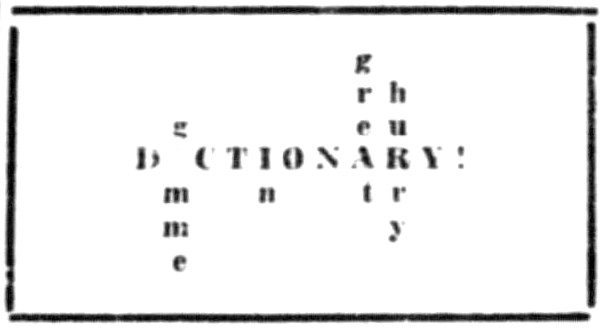
the style of language considered characteristic of crossword clues or solutions—USA, 1925—from the noun ‘crossword’ and the suffix ‘-ese’, forming nouns designating the style of language considered characteristic of the first element
Read Morea game in which players must obey a leader’s instructions if, but only if, they are prefaced with the words ‘O’Grady says’—UK, 1917—game invented during World War One as a play-way for conducting physical exercises and drill in the British Army
Read Moreto be in control of a situation; to be in a dominant position—USA, 1899—originally (USA, 1867) used in reference to hunting game animals
Read More1910: a cheap and common watch—hence (from 1922 onwards) used in various phrases referring to silliness, reliability/unreliability, erraticism, cheapness, funniness
Read MoreAustralia, 1970—as a noun and as a verb, refers to a high-speed drive in a motor vehicle—from the surname of the Argentinian motor-racing driver Juan Manuel Fangio
Read More1943: the noun ‘big spit’ designates ‘vomiting’—1952: the phrase ‘to go for the big spit’ means ‘to vomit’
Read Morea complete certainty—USA, 1887 in the context of horse-racing—of unknown origin
Read More word histories