‘to put on jam’: meanings and early occurrences
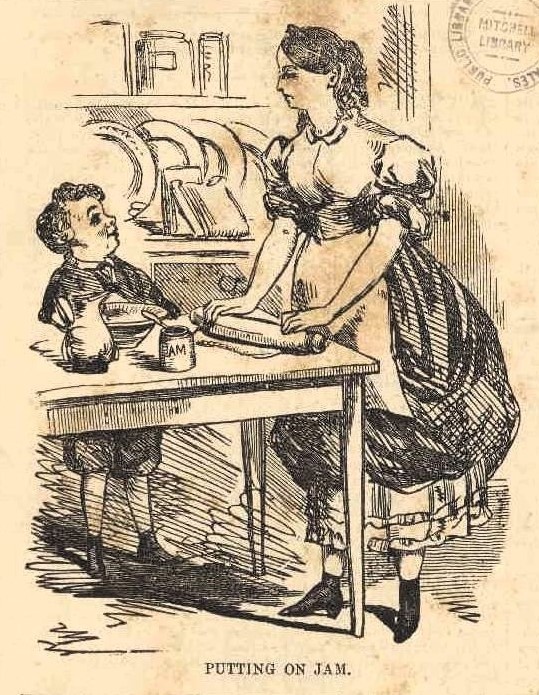
Australia, 1881—to adopt an affected speech or manner, to display self-importance—also, in early use: to embellish the truth, to depict flatteringly
Read More
“ad fontes!”
Australia, 1881—to adopt an affected speech or manner, to display self-importance—also, in early use: to embellish the truth, to depict flatteringly
Read Moreyou cannot improve something which is inherently or unalterably unpleasant, or of poor quality—USA, 1977—originally in reference to rock music
Read More
Australia, 1943, derogatory—a soldier who does not see active service, especially a reservist—from ‘cut lunch’, denoting a packed lunch, typically consisting of sandwiches
Read Morealso ‘like a lily on a dirt-tin’ and variants—something or somebody that is incongruous or conspicuous—UK, 1934, but chiefly Australian (from 1948 onwards)
Read More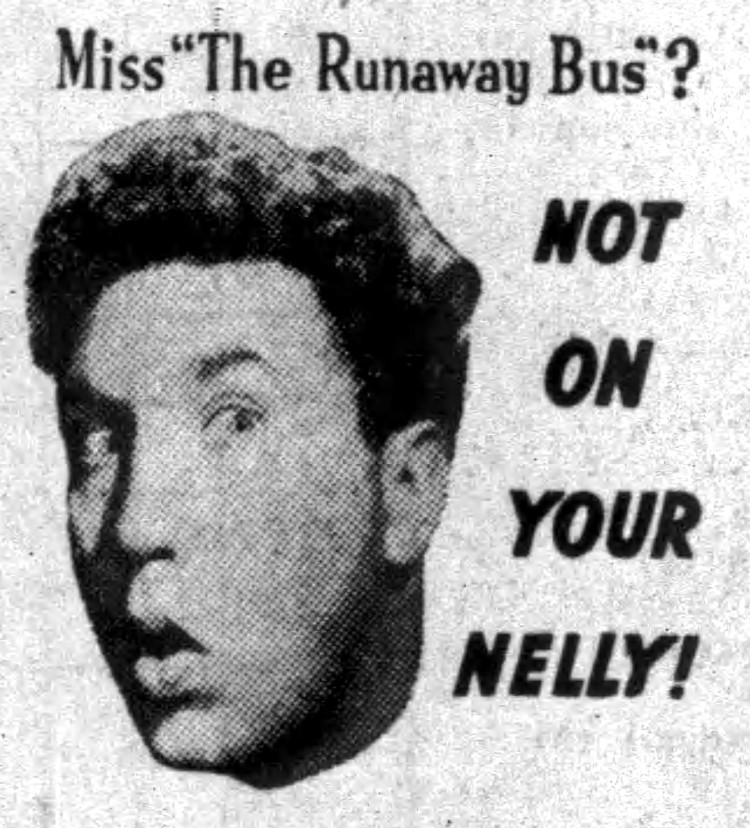
‘not under any circumstances’—Royal Air Force slang, 1942—short for ‘not on your Nelly Duff’, i.e., ‘not on your life’, ‘Nelly Duff’ being rhyming slang for ‘puff’ as used colloquially in the sense of ‘life’
Read MoreUK, 1821—‘muslin’: women regarded collectively as objects of sexual desire—‘a bit of muslin’: a woman regarded as an object of sexual desire
Read MoreAustralia, 1943—a foolish or silly person—from the synonymous noun ‘dill’ (1933), itself apparently a back-formation from the adjective ‘dilly’, meaning ‘foolish’, ‘silly’
Read MoreUSA, 1871: a person who frequently uses or coins slang words and phrases—USA, 1926: a person who studies the use and historical development of slang—blend of the nouns ‘slang’ and ‘linguist’
Read Moreto hurry up (1849 in Charles Dickens’s David Copperfield); the image is of a skater gliding rapidly over an ice surface—also, in early use (USA, 1886): to get drunk; the rolling gait of a drunk person is likened to the swaying motion of an ice skater
Read MoreUSA, 1826, as ‘to flog somebody like seven bells’—to give a severe beating to somebody—‘seven’ is perhaps simply an arbitrary intensifier—cf. phrases such as ‘like seven bells half-struck’ (‘with as much speed as possible’) and ‘to blow seven bells’ (‘to blow a violent gale’)
Read More word histories