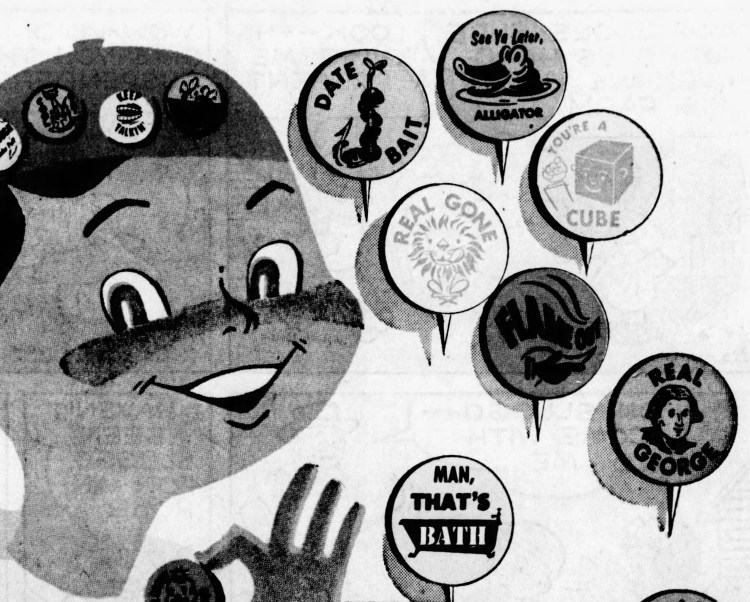
The colloquial see you later, alligator, which originated in American English, is a catchphrase used on parting. The expected response is in, or after, a while, crocodile. —Cf. also notes on ‘see you later, agitator’. The earliest instance of see you later, alligator that I have found is from Teenagers’ Slang Expressions Are Explained by […]
UK, early 19th century—an imaginary street where people in difficulties, now especially financial ones, are supposed to reside—urban counterpart of ‘Dicky’s meadow’
from Spanish ‘vamos’, ‘let us go’—first recorded as ‘vamos’ in ‘Every Night Book; or, Life after Dark’ (London, 1827), by the English author William Clarke
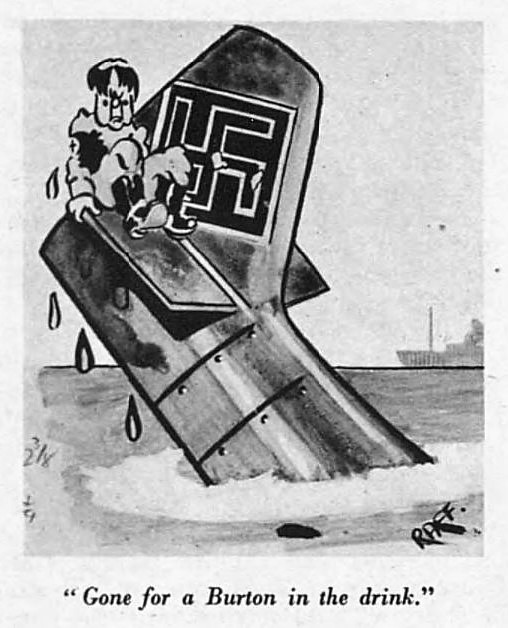
to meet with disaster; to be ruined, destroyed or killed—UK, 1941, RAF slang: (of an airman) to be killed—perhaps from ‘to go for a drink (of Burton ale)’
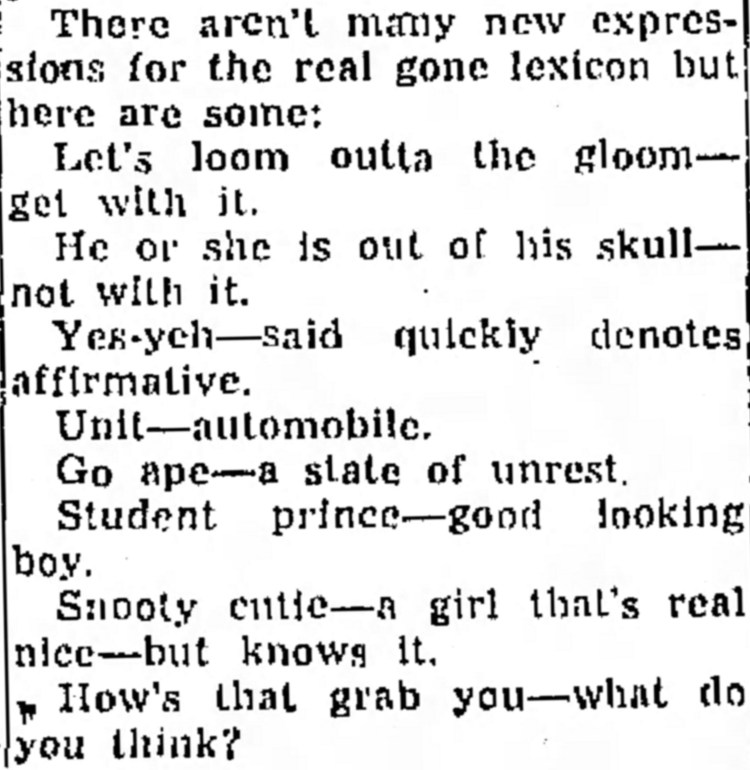
USA—‘not part of a particular exclusive group’, 1955—‘out of one’s mind’, 1958—‘smashed out of one’s skull’ (= ‘drunk’, 1963)—‘bored out of one’s skull’, 1967
early 19th century—probably a jocular application of ‘forty’ as an indefinite term for a large number—‘wink’ in the sense of ‘a closing of the eyes for sleep’
With words denoting some specified deficiency in a desirable or standard quantity of something, ‘short of a ——’ means ‘mentally deficient’, ‘slightly crazy’.

 word histories