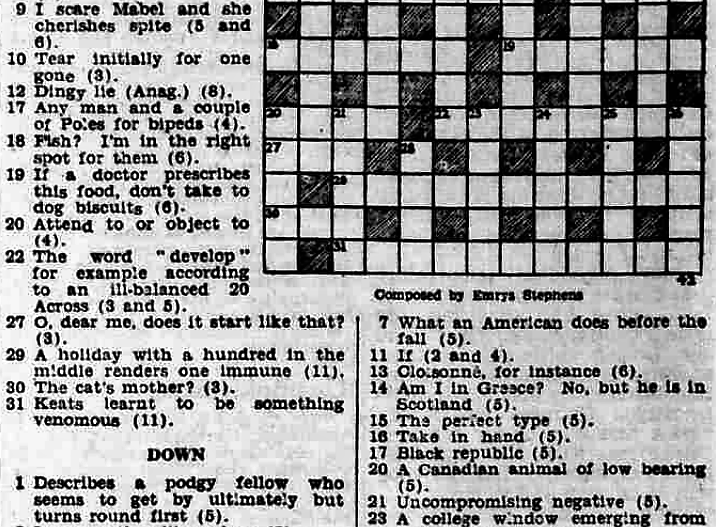
crossword in The Yorkshire Post and Leeds Mercury of 23rd January 1950 30 across: The cat’s mother? (3). The phrase who’s ‘she’—the cat’s mother? and variants are said to a person, especially a child, who uses the feminine third person singular pronoun impolitely or with inadequate reference. The earliest use of the phrase that I found is from The White […]
James Crichton of Clunie (circa 1560-1582) was a Scottish prodigy of intellectual and knightly accomplishments, and the epithet admirable became traditionally applied to him. The Scottish scholar John Johnston (circa 1565-1611) used the Latin adjective admirabilis in Heroes ex omni historia Scotica lectissimi (1603), a collection of biographies and eulogies in elegiac couplets of great […]
The phrase to teach one’s grandmother to suck eggs means to presume to advise a more experienced person. Raw eggs, with or without a little seasoning, used to be a popular food and were regarded as healthy. Grandmothers obviously needed no instruction about how to drink them. The phrase is first recorded in a translation from Spanish by […]
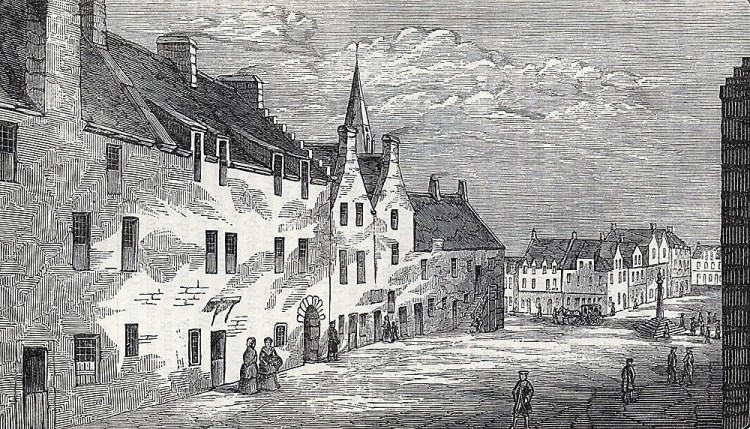
the Rotten-row in Glasgow, circa 1570 image: The Glasgow Story The street name Rotten Row occurs in many different towns. For example, The Caledonian Mercury (Edinburgh) of 10th December 1728 published the following advertisement: There is just come to Leith, a Parcel of fine Figs both in Casks and Frails [= baskets], […]
The words man and mouse have been used in alliterative association in: – neither man nor mouse, to mean not a living creature, great or small, – mouse and man, or mice and men, to mean every living thing. The first known user of neither man nor mouse was the poet and writing-master John Davies […]
The noun sport is a shortening of disport, which was borrowed in the early 14th century from Anglo-Norman and Old and Middle French forms such as desport, deport, disport (modern French déport). This French word was thus defined by Randle Cotgrave in A Dictionarie of the French and English Tongues (1611): Deport: masculine. Disport, sport, […]
MEANING a man unduly concerned with looking stylish and fashionable ORIGIN As it was originally in use on the Scottish Border at the end of the 18th century, dandy represents perhaps the name Andrew. (From Dandie Dinmont (i.e. Andrew Dinmont), the name of a character in Guy Mannering; or, The Astrologer (1815), […]
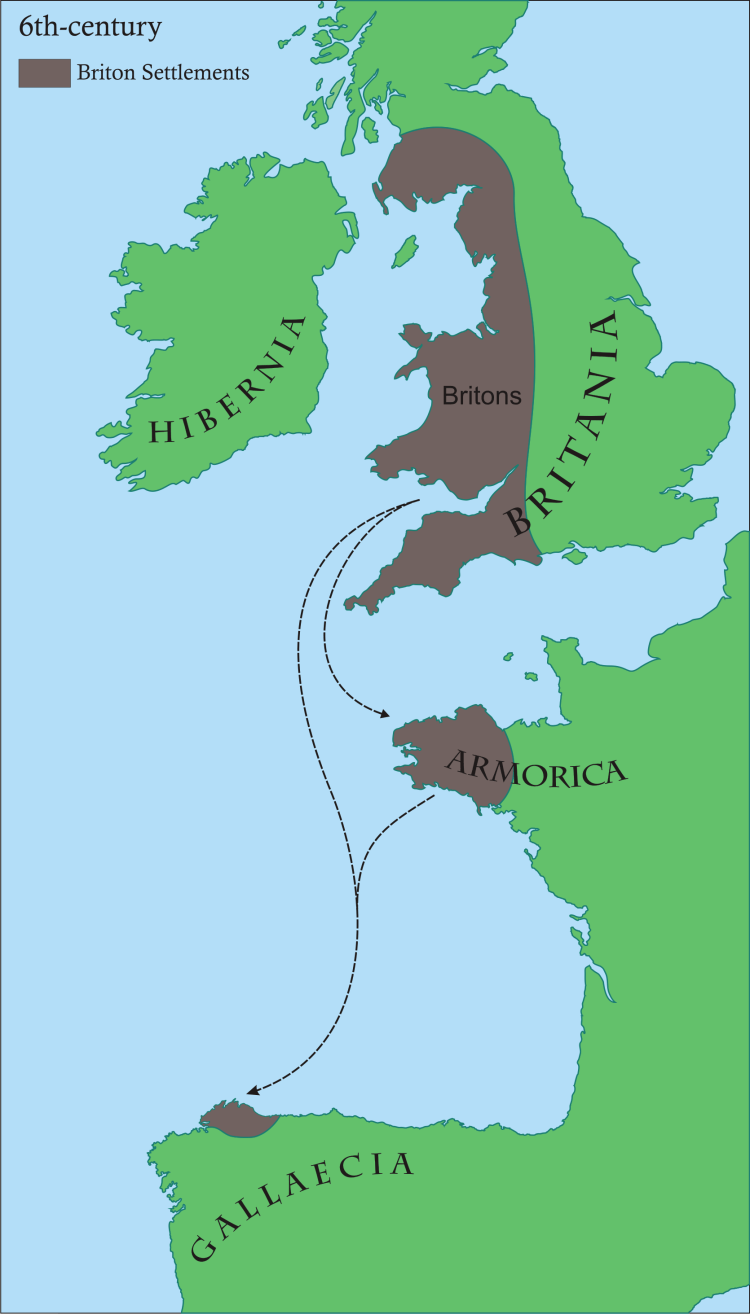
Briton settlements in the 6th century – settlements of the Angles, Saxons and Jutes in Britain, circa 600 In the following, Briton will refer to the Celtic Brittonic-speaking peoples who inhabited Britain south of the Firth of Forth, and who, following the arrival of the Anglo-Saxons in the 5th century, gradually retreated until the […]
The verb to sack (someone) means to dismiss (someone) from employment. This verb seems to have appeared in the first half of the 19th century. For example, the Perthshire Courier (Scotland) of Thursday 29th April 1841 reported that at the Glasgow assizes, during the trial for the murder of a superintendent of Railway labourers, one […]
The phrase ‘a pretty kettle of fish’ originally referred to a net full of fish, which, when drawn up with its contents, is suggestive of confusion, flurry and disorder—‘kettle’ being a form of ‘kiddle’, a noun denoting a dam or other barrier in a river, with an opening fitted with nets to catch fish.

 word histories