‘bang went sixpence’: origin and early occurrences
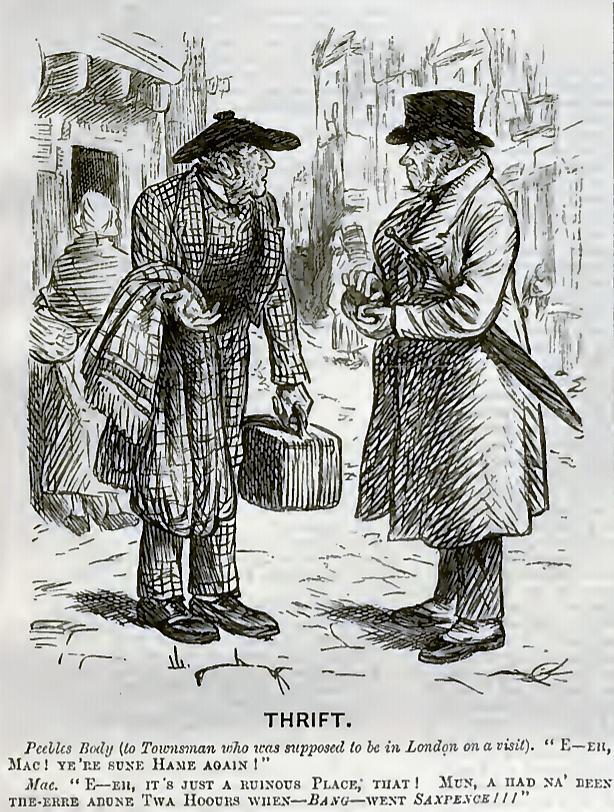
UK, 1870—based on the stereotype of Scots being miserly—from the story of the Scotsman who complained that he had to spend, in London, the small sum of sixpence
Read More
“ad fontes!”
UK, 1870—based on the stereotype of Scots being miserly—from the story of the Scotsman who complained that he had to spend, in London, the small sum of sixpence
Read More1928—addressed to someone who looks glum—‘scone’ (originally Scots, early 16th century) denotes a light plain doughy cake
Read MoreUK, 1825—the Scots, allegedly verminous, were said to rub themselves against posts erected by the Duke of Argyll and to bless the Duke when doing so
Read Moredon’t be so niggardly with your money—USA, 1935—the image is of moths that are living in a purse or wallet because it is not frequently opened
Read Moreto have no idea at all—Scotland, 1990—‘scooby’ (short for ‘Scooby Doo’, name of cartoon dog in U.S. television series and films): rhyming slang for ‘clue’
Read More1950—Sunday trip by car or bus, making use of the bona fide clause in licensing laws, by which non-residents got alcohol—coined by Scottish novelist George Blake
Read More
Ireland, 1820—violent quarrel—refers to the fact that wigs are liable to fall or to be pulled off in a fray
Read MoreUK, 1957—an expression of encouragement, but often used ironically with the opposite meaning—origin unclear
Read More1971—any of the Protestant street gangs of young men in Northern Ireland—from their traditional support of Glasgow Rangers Football Club
Read MoreEngland, 1971—(informal, humorous) the fans of the Scottish football team, considered as a group
Read More word histories