Britain, 1747: dew of the kind that settles on mountains—Scotland, 1816: whisky or other spirit, especially when home-made or illicit (originally in reference to whisky distilled in the Highlands, i.e., in the mountainous region of Scotland)
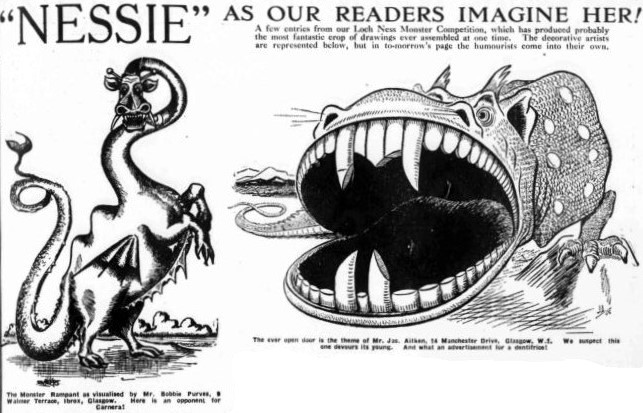
Scotland—1852: illustrates how people will react when spotting unidentified creatures in Loch Ness—1892: mocks the many alleged sightings of the sea-serpent at that time
Scotland, 1941—of a person, manner of speaking, etc.: affectedly refined or cultivated, pretentious—from the fact that a pan-loaf (i.e., a loaf baked in a pan or tin, having a hard, smooth crust), being more expensive than a plain loaf, was considered a sign of affluence
Australian soldiers’ slang, 1917—literally: to fall heavily; figuratively: to suffer a failure or defeat—‘gutser’ (Scotland, 1901): originally denoted a belly flop—derived from ‘gut’ in the sense of the belly
Scotland, 1825 (as ‘bane idle’)—England, 1839—utterly lazy or indolent—‘bone’ seems to be used as an intensifier with adverbial force in the sense ‘through to the bone’, i.e., ‘deeply and fundamentally’
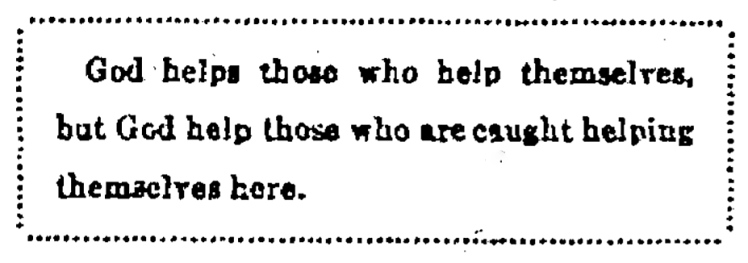
Scotland, 1806—to make a determined effort to achieve something, whether ending in success or failure—refers to the making of spoons out of the horns of cattle or sheep, which was common in Scotland till late in the 19th century
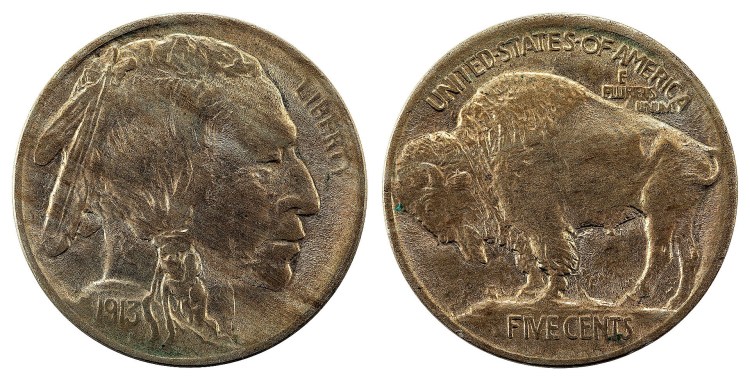
to be extremely tight with money—USA, 1926—refers to the five-cent coin, struck from 1913 to 1938, featuring a Native American on one side and a bison on the other

 word histories