original meaning and sense development of ‘wild-goose chase’
originally a kind of horse chase in which the second horse had to follow the course of the leader, like a flight of wild geese
Read More
“ad fontes!”
originally a kind of horse chase in which the second horse had to follow the course of the leader, like a flight of wild geese
Read MoreFrom the 17th century onwards, Grub Street, in Moorgate, London, was inhabited by literary hacks.
Read More
The spelling ‘ache’ (erroneously derived from Greek ‘ákhos’) instead of ‘ake’ is largely due to Samuel Johnson in A Dictionary of the English Language (1755).
Read Moremid-17th cent. in the sense ‘brand new’—from ‘spick and span new’, extension of ‘span new’, from Old Norse ‘spán-nýr’, ‘as new as a freshly cut wooden chip’
Read Morethe troubles and activities of the world—literary or humorous, from Hamlet’s speech “to be or not be”—‘coil’: probably from Middle French ‘acueil’, encounter
Read More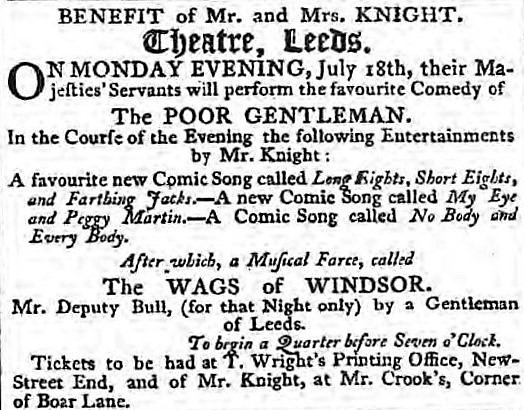
second half of the 18th century—a mere fanciful extension of ‘all my eye’—maintained in a sort of artificial life by persistent conjectures about its origin
Read More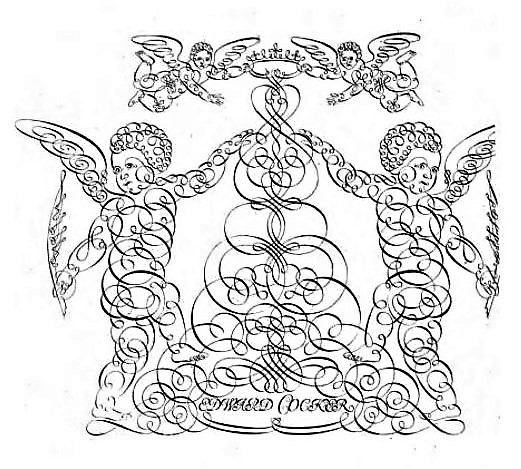
according to Cocker: correctly; reliably—early 19th century, from the name of Edward Cocker (1631-75), English arithmetician, reputed author of a popular Arithmetick
Read More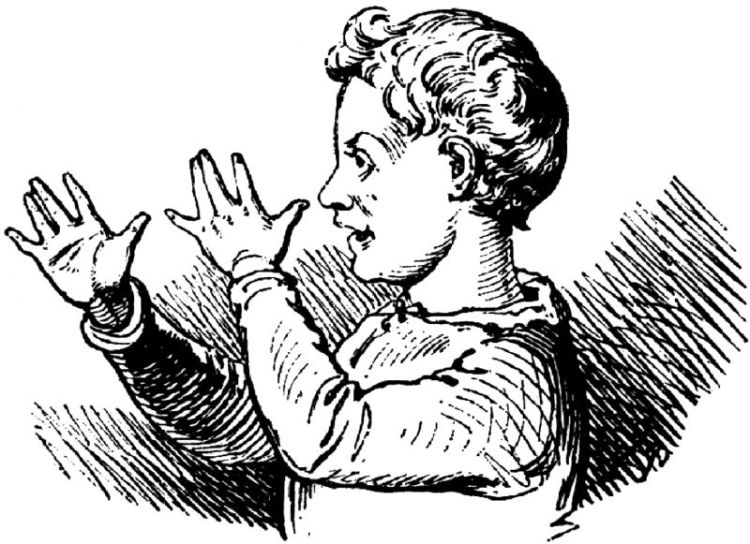
The phrase to cock (also to cut, to pull) a snook, or snooks, means: – literally: to make a gesture of derision by putting one’s thumb to one’s nose and outspreading the fingers; this gesture can be intensified by joining the tip of the little finger to the thumb of the other hand, whose fingers are […]
Read MoreThe English adjective imbecile is, via French, from the Latin imbecillus, or imbecillis, meaning weak, feeble, in body or mind. In his etymological encyclopaedia Originum sive Etymologiarum (The Origins or Etymologies), the Spanish archbishop and Doctor of the Church St Isidore of Seville (circa 560-636) wrote that the literal meaning of the Latin adjective is quasi sine baculo, as though (walking) without a supporting staff. The […]
Read MoreThe word kidney, which is attested around 1325, is of unclear origin. The second element of the Middle-English form kidenei, plural kideneiren, is apparently ey, plural eyren, meaning egg (cf. German Eier, literally eggs, used to mean testicles). The first element remains uncertain; it is perhaps identical with cud. The Anglo-Saxon name for kidney was […]
Read More word histories