‘Concordski’: meaning and origin
UK, 1965—humorous—the Soviet supersonic airliner Tupolev Tu-144—from ‘Concorde’, the name of an Anglo-French supersonic airliner, and the suffix ‘-ski’, in humorous imitation of Russian
Read More
“ad fontes!”
UK, 1965—humorous—the Soviet supersonic airliner Tupolev Tu-144—from ‘Concorde’, the name of an Anglo-French supersonic airliner, and the suffix ‘-ski’, in humorous imitation of Russian
Read Morea makeshift incendiary device for throwing by hand, consisting of a bottle filled with flammable liquid and with a piece of cloth as a fuse—Finland, 1940, in reference to Vyacheslav M. Molotov, who led the Soviet campaign against Finland
Read MoreUK, 1950, as ‘old boy net’—a system of favouritism and preferment operating among people of a similar social, usually privileged, background, especially among former pupils of public schools
Read Morean impressive facade or show designed to hide an embarrassing or shabby fact or condition—1843—from the sham villages said to have been built by Grigori Potemkin to deceive Catherine II
Read More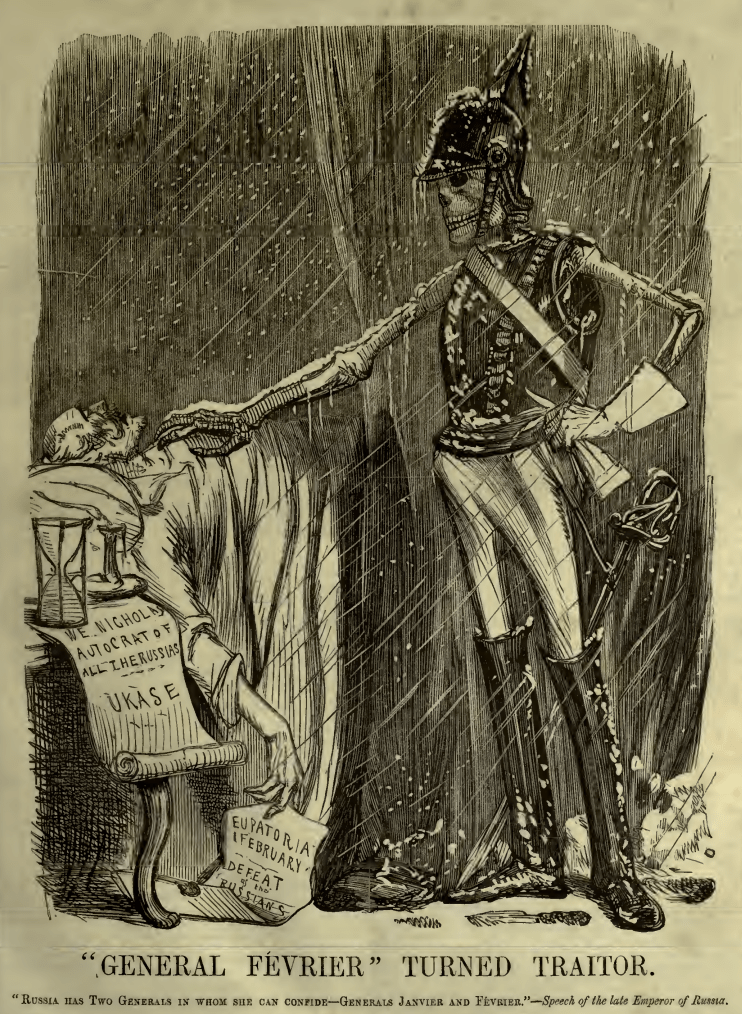
personify January and February as army commanders, especially in reference to winter as detrimental or destructive to a military campaign—apparently coined by Russian Prince Alexander Menshikov in 1855, during the Crimean War
Read Morepersonifies the winter season as an army commander, especially in reference to winter as detrimental or destructive to a military campaign—UK, 1777, in reference to the War of American Independence
Read Morea country characterised by absurdity—originally used of Czechoslovakia—the suffix ‘-istan’ (in country names such as ‘Pakistan’) is used as the second element in satirical names denoting, in particular, ‘a country characterised by [the first element]’
Read Morea nickname given to London, which has, since the collapse of the Soviet Union, attracted Russian oligarchs—also used earlier in reference to Communism—modelled on Russian city names such as ‘Leningrad’ and ‘Stalingrad’
Read Morecompromising information collected for use in blackmailing, discrediting or manipulating a person, group, etc.—borrowed from Russian (Soviet secret police) ‘kompromat’, from ‘kompro-’ in ‘komprometirujuščij’, meaning ‘compromising’, and ‘mat-’ in ‘material’, meaning ‘material’
Read More
American English—a surge of extremely cold air which causes rapid falls in temperature and severe wintry weather in central and eastern areas of the United States and Canada—after ‘Trans-Siberian Express’, the name of a railway running from Moscow to Vladivostok on the Sea of Japan
Read More word histories