a picture conveys far more than words—USA, 1877, as ‘a picture tells more than printed words’—from 1866 to 1876 the notion had been used with specific reference to pictures by the cartoonist Thomas Nast
USA, 1835—to assume a pretence of courage—originally (from 1801 onwards): with explicit reference to a child putting on a brave front by whistling in the dark
a cake made with the ingredients available during wartime—first used during the First World War (1914-1918)—came back into usage during the Second World War (1939-1945)
early 19th century—chiefly U.S.—to be forced by another to walk on tiptoe—to walk cautiously—to be discharged or dismissed—to discharge or dismiss (someone)—origin unknown
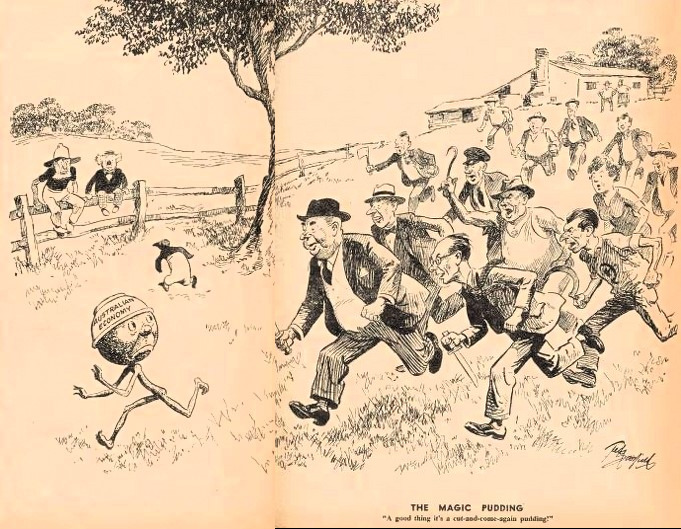
Australia, 1934—an inexhaustible supply of something, especially money—alludes to The Magic Pudding (1918), by Norman Lindsay, in which a pudding instantly renews itself as it is sliced or eaten into
USA, 1946—a feeling of regret experienced after making a purchase—also, in extended use: a feeling of regret experienced after voting for a particular person or programme
UK, 1958—a type of moustache in which the two ends extend downwards to the chin—refers to Emiliano Zapata, who was portrayed with a moustache of this kind by Marlon Brando in Viva Zapata! (1952)

 word histories