‘Peter Grievous’: meaning and origin
a person who whines or complains—UK, 1769, humorous—‘Peter’ is used as a generic forename, and the adjective ‘grievous’ (meaning ‘aggrieved’) is treated as a surname
Read More
“ad fontes!”
a person who whines or complains—UK, 1769, humorous—‘Peter’ is used as a generic forename, and the adjective ‘grievous’ (meaning ‘aggrieved’) is treated as a surname
Read More
a cheap suit of clothes; a (cut-price) tailoring business—UK, 1920, informal—refers to Harry Mallaby-Deeley (1863-1937), a Member of Parliament who opened a cut-price tailoring business in 1920
Read Moredefined by Collins Dictionary as denoting “an extended period of instability and insecurity, especially one resulting from a series of catastrophic events”—first used in 1975 by the U.S. political scientist John Pearson Roche
Read More
a rebuke given in private by a wife to her husband—1625—from the idea that, in order to conduct herself properly, a wife was to rebuke her husband in secret only, i.e., in the privacy of their curtained bed
Read Moreused of a person who likes to observe other people’s activities from his or her window, in a furtive and prying manner—UK and Ireland, 1940
Read More
the affected dandyism of the writers, artists, etc., associated with the aesthetic movement, which advocated a doctrine of ‘art for art’s sake’—UK, 1879—coined by George Du Maurier in cartoons published in Punch
Read Morethe political, military or economical threat regarded as being posed by certain peoples of South-East and East Asia, especially the Chinese and the Japanese—UK, 1895—loan translation from French ‘péril jaune’
Read More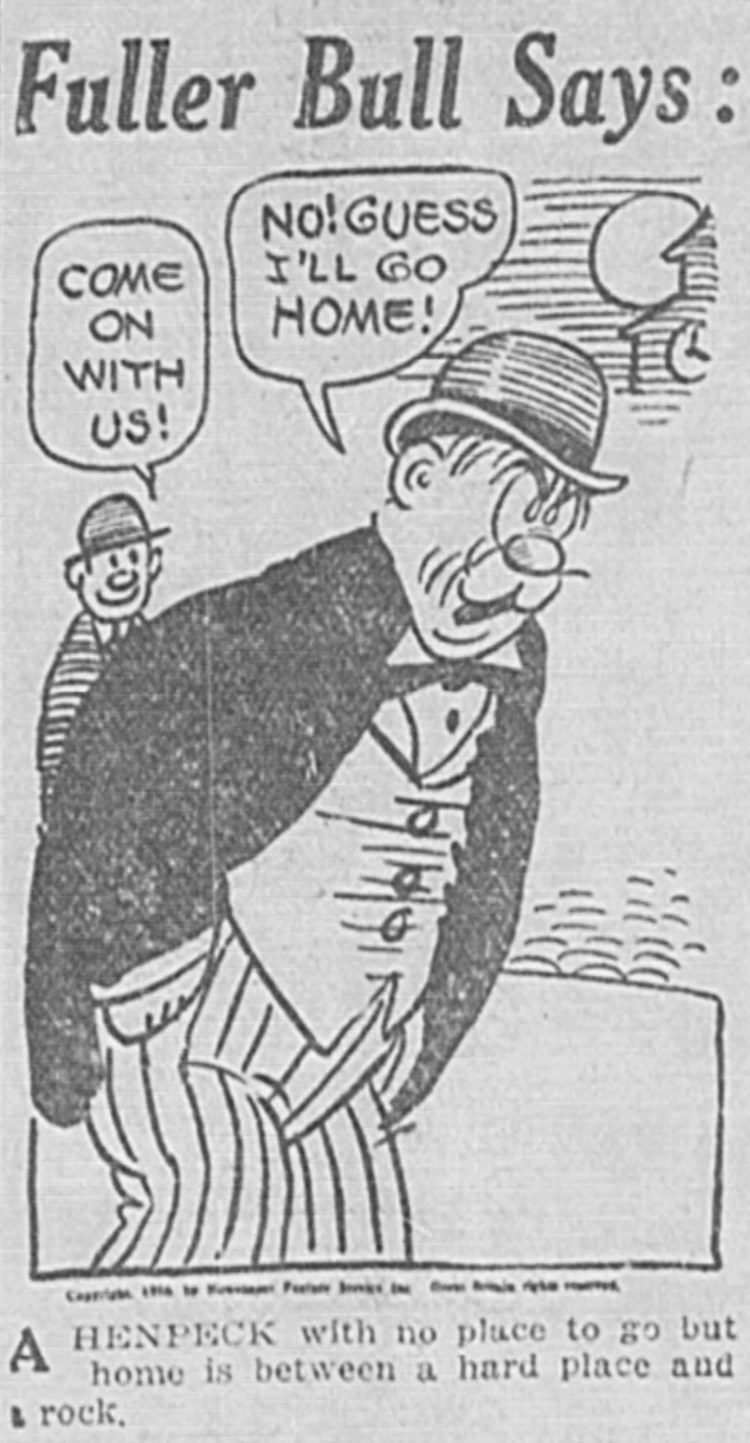
faced with two equally difficult alternatives; in a dilemma—USA, 1914
Read Moremeaning: a person cannot be expected to behave in a manner that is not in their character—numerous variants—first recorded in 1731 as ‘If we petition a Hog, what can we expect but a grunt’
Read More(humorous and frequently ironic) determinedly or stubbornly independent—USA, 1841—apparently refers to the extreme helplessness of a hog (i.e., a pig) on the ice
Read More
