meaning and origin of the phrase ‘in a nutshell’
The phrase ‘in a nutshell’ originated in a story told by Pliny of a copy of Homer’s ‘Iliad’ supposedly small enough to be enclosed in the shell of a nut.
Read More
“ad fontes!”
The phrase ‘in a nutshell’ originated in a story told by Pliny of a copy of Homer’s ‘Iliad’ supposedly small enough to be enclosed in the shell of a nut.
Read MoreThis phrase originated in the belief that bear cubs were born formless and had to be licked into shape by their mother.
Read More
A Mad Dog in a Coffee House (London, 20th March 1809) by the English caricaturist Thomas Rowlandson (1756-1827) The term hair of the dog denotes an alcoholic drink taken to cure a hangover. It is a shortening of the phrase hair of the dog that bit you, first recorded in A dialogue […]
Read More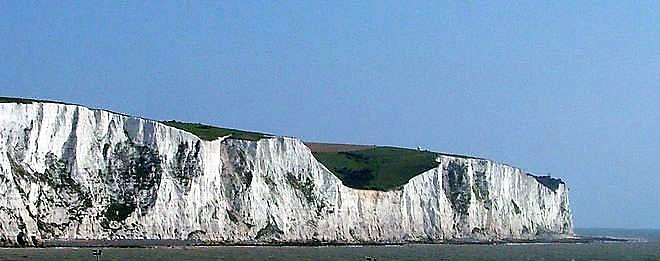
The white cliffs of Dover— to which the name Albion did not originally refer [cf. note]. (photograph: Wikimedia Commons/Fanny) The name Albion first appeared in English in the very first sentence of the first Book of the 9th-century translation of Historia ecclesiastica gentis anglorum (The Ecclesiastical History of the English People) originally written by the English monk, […]
Read MoreThe Latin noun halcyon, more properly alcyon, was derived from Greek ἀλκυών (= alkuon), incorrectly spelt ἁλκυών (= halkuon), meaning kingfisher. The ancients fabled that the halcyon bred about the time of the winter solstice in a nest floating on the sea, and that it charmed the wind and waves so that the sea was […]
Read MoreMEANING any plant of the European genus Reseda, including mignonette and dyer’s rocket, which has small spikes of greenish, yellowish or whitish flowers ORIGIN Through translations of Naturalis Historia (Natural History – 77), a vast encyclopaedia of the natural and human worlds by the Roman statesman and scholar Pliny the Elder […]
Read MoreThe noun pastis designates an aniseed-flavoured aperitif, while pastiche, or pasticcio, denotes a work of art that imitates the style of another artist or period and a work of art that mixes styles, materials, etc. Unlikely as it may seem, these words are doublets, or etymological twins: although they differ in form and meaning, they go […]
Read MoreThe French term foie gras, from foie, liver, and gras, fat, fatty, denotes the liver of a specially fattened goose or duck prepared as food. Short for pâté de foie gras, it also denotes a smooth rich paste made from fatted goose or duck liver. Its first known use in English is in The Fudge […]
Read More
The English nouns lobster and locust are doublets. Doublets (or etymological twins) are words in one given language that go back to the same etymological source but differ in form and meaning—cf. also turban – tulip, clock – cloak, pastiche – pastis and fawn – fetus. The word lobster is from Old English […]
Read More word histories