UK, 19th century—‘red on the map’: the colonies and dominions of the British Empire—‘to paint the map red’: to expand the territory of the British Empire—from the colour used to represent British colonies and dominions on maps
1609—to add to what is already great, also to add difficulty to difficulty—Pelion and Ossa are two mountains in Thessaly—in Greek mythology, two giants, Otus and Ephialtes, tried to pile Pelion and Ossa on Olympus in order to reach the gods and overthrow them
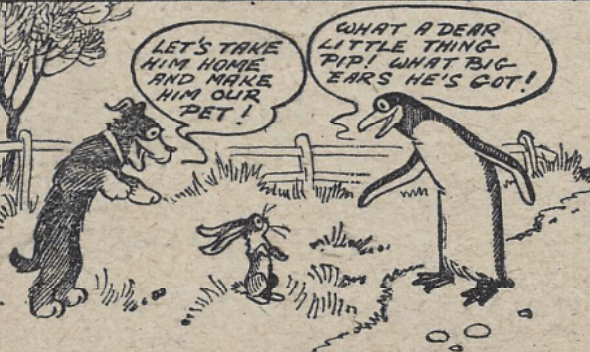
UK, 1920—a group of three objects or persons—alludes to Pip, Squeak and Wilfred, a trio of animal characters featured in a children’s comic strip published in The Daily Mirror (London) from 1919 onwards
Australia, 1847—an odd-job man—‘wood-and-water’ alludes to the phrase ‘hewer of wood and drawer of water’, designating a labourer of the lowest kind—‘joey’ is perhaps the noun denoting a young kangaroo, and by extension anything young or small
1727—a labourer of the lowest kind—refers to the enslavement of the Gibeonites by the Israelites in the Book of Joshua, 9:21-27, as it occurs in the King James Bible (1611)
UK, 1993—meaning: influenced or determined by a person’s locality or postal address—in phrases such as ‘postcode discrimination’—frequently with reference to the unequal provision of healthcare
UK, 1938—a state of nervous agitation or confusion; also, occasionally: a state of physical disorder or chaos—of unknown origin; perhaps a fanciful variant of the synonymous noun ‘tizz’
USA, 1974—a moment of sudden realisation, enlightenment or inspiration—alludes to the representation of an illuminated lightbulb above a character’s head in a cartoon or comic strip, indicating that this character has had an idea


 word histories