to abandon or betray someone in order to protect or advance one’s own interests—originally (British politics, 1971) ‘to push someone under a bus’—derived from ‘to walk under a bus’ (British politics, 1966)
scarce; infrequent; difficult to find or to come by—one early use in 1668—but popularised by the Irish author Thomas Campbell in The Pleasures of Hope (1799)
smartly dressed—from the verb ‘fig out/up’, meaning ‘to smarten up’—this verb is probably an alteration of the verb ‘feague’, of uncertain origin, meaning ‘to make (a horse) lively’
to embark enthusiastically on a course of action that most sensible people would avoid—coined as ‘fools rush in where angels fear to tread’ by the English poet Alexander Pope in An Essay on Criticism (1711)
to be glad of minor benefits, especially in an otherwise unpleasant or troublesome situation—first recorded in The Heart of Midlothian (1818), by Walter Scott
a bias whereby people who have little ability in, or knowledge of, a particular task or subject tend to overestimate their capabilities—USA, 2008—refers to David Dunning and Justin Kruger, who described this bias in the Journal of Personality and Social Psychology in 1999
a difficult, uncooperative or unsociable person—UK, 1829—from French ‘mauvais coucheur’, literally ‘bad bedfellow’, with original allusion to a person whom a traveller had to share a bed with when stopping over at an inn
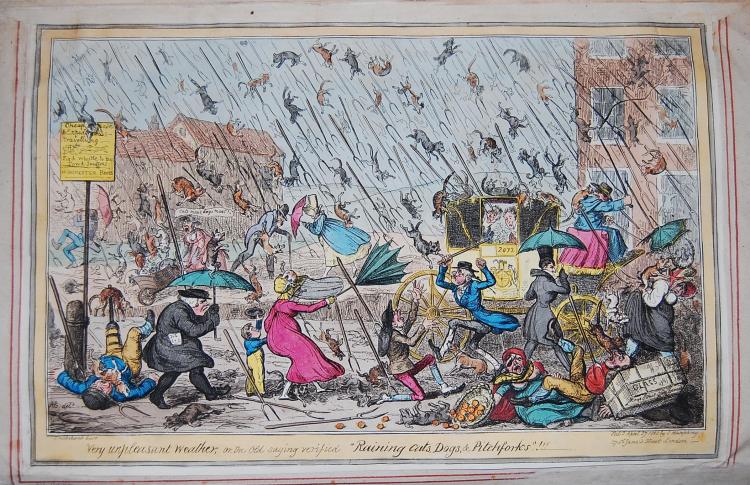
UK, 1856—jocular extension of ‘to rain cats and dogs’ (i.e., ‘to rain very hard’)—puns on the verb ‘hail’ (i.e., ‘to pour down like hail’) and the verb ‘hail’ (i.e., ‘to call out (a cab)’)
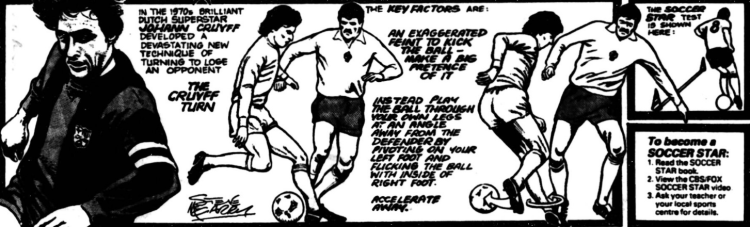
in soccer: a manoeuvre used by one player to evade another—UK, 1980s—refers to Dutch footballer Johan Cruyff, who first brought this manoeuvre to public attention by performing it in 1974

 word histories