origin of ‘Yorkshire tyke’ (nickname for a person from Yorkshire)
The word ‘tyke’, a nickname for a person from Yorkshire, originally meant ‘mongrel’. The people from Yorkshire have adopted it as a term of self-reference.
Read More
“ad fontes!”
The word ‘tyke’, a nickname for a person from Yorkshire, originally meant ‘mongrel’. The people from Yorkshire have adopted it as a term of self-reference.
Read More
‘Over the top’, which means ‘excessive’, originated as a WWI expression meaning ‘over the parapet of a trench and into battle’.
Read More
The phrase ‘(with) tongue in cheek’ originally referred to a sign of contempt or derision consisting in sticking one’s tongue in one’s cheek.
Read More‘Mad as a hatter’ might be from ‘like a hatter’, an intensive phrase meaning ‘like mad’, perhaps related to the verb ‘hotter’, expressing motion and emotion.
Read More
‘(As) mad as a March hare’ refers to the fact that, in the breeding season, the hare is characterised by much leaping, boxing and chasing in circles.
Read More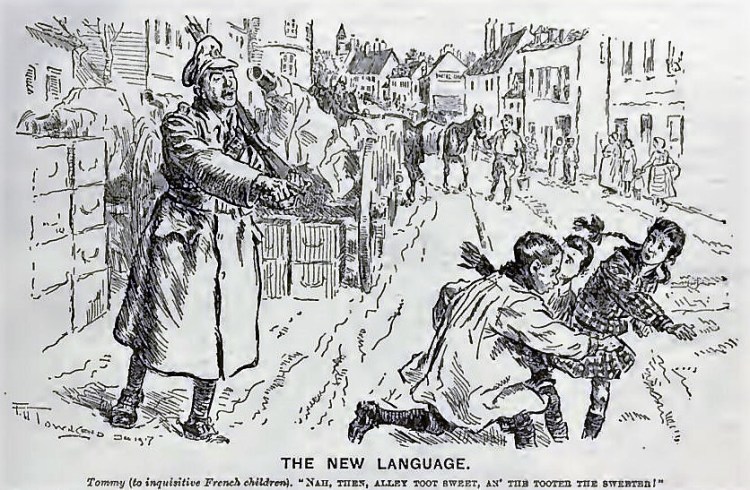
The adverb toot sweet means straight away, immediately. Humorously after the English words toot and sweet, it represents an anglicised pronunciation of the synonymous French adverb tout de suite. Before the First World War, it was only used in representations of French speech. For example, an article titled Galloglossia, published in Sharpe’s London Magazine […]
Read More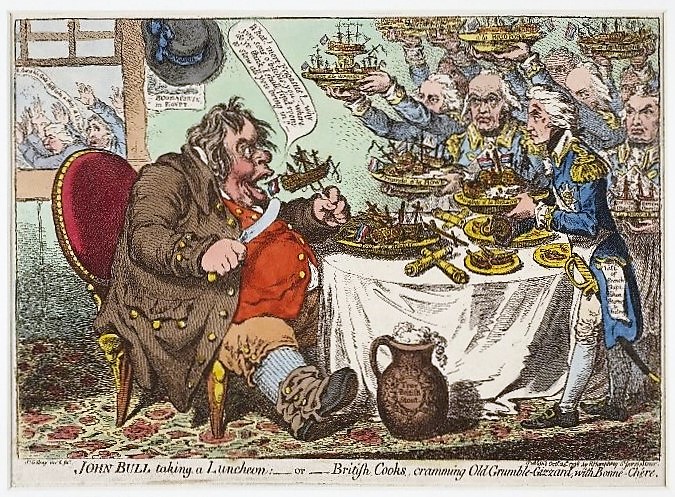
John Bull taking a Luncheon:—or—British Cooks, cramming Old Grumble-Gizzard, with Bonne-Chère. hand-coloured etching by James Gillray, published on 24th October 1798 — © Trustees of the British Museum This print was published just after Nelson’s victory at the Battle of the Nile. He is shown in the forefront of British admirals and naval heroes, serving up […]
Read MoreThe term old chestnut denotes a joke, story or subject that has become tedious and uninteresting through constant repetition. Here, the adjective old is simply an intensifier of the noun. The figurative use of chestnut originated in American-English theatrical slang. Diary of a Daly Débutante: being passages from the journal of a member of Augustin Daly’s […]
Read More
FREE! For the Salesman who wants to add at least $50,000 to his income every year “Cold Call Selling” the great new approach that turns […]
Read More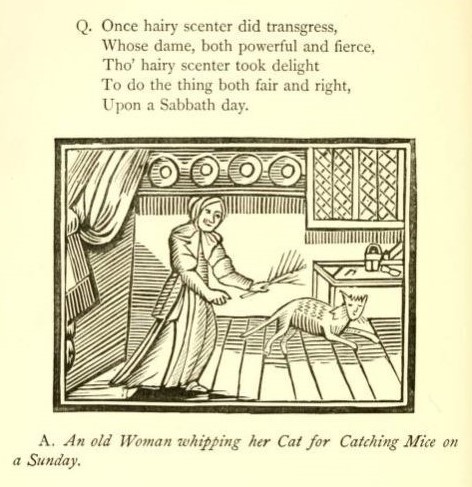
Q. Once hairy scenter did transgress, Whose dame, both powerful and fierce, Tho’ hairy scenter took delight To do the thing both fair and right, Upon a Sabbath day. A. An old Woman whipping her Cat for Catching Mice on a Sunday. from The True Trial […]
Read More
