a curious case of misunderstanding in the Oxford English Dictionary

‘Wash the milk off your liver’: refers to the digestibility of milk, but misunderstood by the Oxford English Dictionary as referring to cowardice
Read More
“ad fontes!”
‘Wash the milk off your liver’: refers to the digestibility of milk, but misunderstood by the Oxford English Dictionary as referring to cowardice
Read Moreto get credit or money by using a fraudulent financial instrument; to send an illicit or secret note; to find out in what direction affairs are tending
Read More‘to season’, from Old French ‘saisonner’: ‘to do something during the proper season’, hence ‘to make appropriate to the circumstances’, ‘to flavour (a dish)’
Read Morethe troubles and activities of the world—literary or humorous, from Hamlet’s speech “to be or not be”—‘coil’: probably from Middle French ‘acueil’, encounter
Read Morefrom the gospel of Matthew, 18:6: If someone causes a child to sin, it would be better for them to have a millstone hung around their neck and be drowned in the sea.
Read More
obsession—from Dickens’s ‘David Copperfield’, in which Mr. Dick is unable to write his memoirs because of the intrusive image of King Charles the First’s head
Read Moresomething in its entirety—UK, 2nd half of 20th cent.—the sense of striptease performance involving full nudity was popularised by the 1997 film The Full Monty.
Read More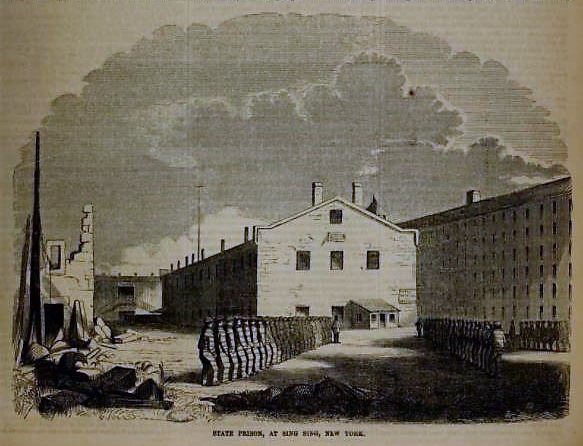
US, 19th cent.—‘to send up the river’ (to send to prison)—originally referred to Sing Sing prison, situated up the Hudson River from the city of New York
Read More
This phrase originated in the history of American slavery: the river was the Mississippi and down implied the transfer of slaves from north to south.
Read MoreBritish, 18th century—a mock oath attributed to sailors, meaning ‘may my ship’s beams be broken into pieces’—early variants used by Tobias Smollett
Read More
