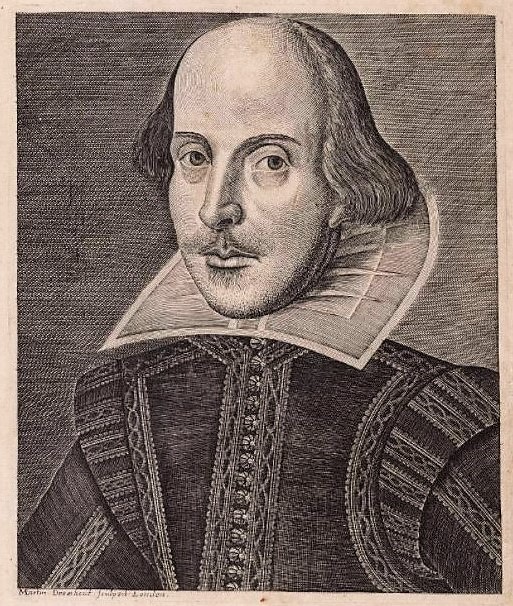
an epithet for William Shakespeare, born at Stratford-upon-Avon, on the River Avon—first used by Ben Jonson in the earliest collected edition (1623) of Shakespeare’s plays—but this use of ‘swan’ for a bard, a poet, is rooted in a tradition going back to antiquity
from 1857 onwards in Australian newspapers, but apparently of Irish-English origin—the forename ‘Larry’ was probably chosen as a jocular reinforcement, a variant reduplication, of the adjective ‘happy’
Italian translation of Latin ‘in pectore’ (‘in the breast’, ‘in the secret of the heart’)—when a pope announces that he has appointed a cardinal whom he reserves ‘in petto’, it means that he will reveal this cardinal’s name later
Originally, the mother was the object of ‘deliver’, the image was of delivering (freeing) her from the burden of pregnancy. Nowadays, the healthcare provider or the mother is the subject, the image is of delivering (handing over) the baby, as if it were a package.
mi-17th century—probably from ‘hand in (the) cap’, used of a sort of game in which players put forfeit money in a cap and then drew from it—later applied to a race between two horses (the better of which carried extra weight), arranged by such rules
British English, first recorded, apparently as army slang, in 1945—probably from ‘bonk’ (= a blow on the head) and the suffix ‘-ers’ as in ‘ravers’ (from ‘raving mad’) and ‘starkers’ (from ‘stark mad’)
First recorded in 1694, ‘Peg Tantrum’ was chiefly used in the phrase ‘to go to Peg Trantum’s’, meaning ‘to go to one’s death’. This word is perhaps from ‘Peg’, rhyming form of ‘Meg’, pet form of the female forenames ‘Margery’ and ‘Margaret’, and from ‘tantrum’.
UK, 1819—specifically invented to qualify the English poet and critic William Gifford with reference to the fact that he had been a shoemaker’s apprentice—alludes to the proverb ‘let the cobbler stick to his last’ from Pliny’s Natural History (AD 77)
A diminutive of ‘pūpa’ (‘a girl’, in transferred use also ‘a doll’), the Latin feminine noun ‘pūpilla’ came to also denote ‘the pupil of the eye’ on account of one’s own reflection seen when looking into somebody’s eye—the same metaphor underlies ‘to look babies in somebody’s eyes’.
The phrase ‘boys in the backroom’, or ‘backroom boys’, appeared in the 1920s as a U.S. political term denoting persons exercising a surreptitious influence. The Oxford English Dictionary is therefore mistaken in saying that it originally denoted, in 1941, persons engaged in research.