‘Skinny Lizzie’: meaning and origin

UK, 1916—a scrawny girl or woman—may have originated in the title of a successful song (and in the name of an equally popular character) created in 1911 by the comedienne Lily Long
Read More
“ad fontes!”
UK, 1916—a scrawny girl or woman—may have originated in the title of a successful song (and in the name of an equally popular character) created in 1911 by the comedienne Lily Long
Read More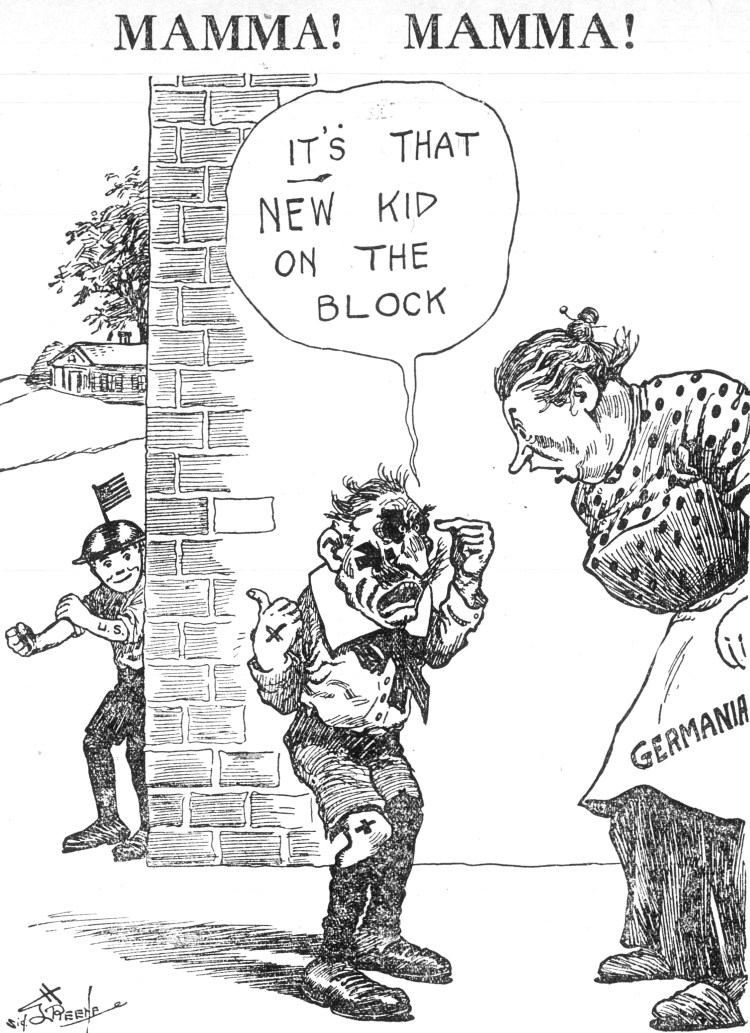
USA, 1911: a newcomer—but, from 1903 onwards, as ‘new kid in one’s block’: a child who has recently moved into the block where one lives—‘block’: a group of buildings in a city bounded by intersecting streets on each side
Read MoreUSA 1913: a newcomer—but, from 1883 onwards, in birth announcements: a newborn baby
Read MoreUSA, 1869—originally and chiefly used in relation to the Wild West, refers to a decisive confrontation between two gunfighters
Read Morea picture conveys far more than words—USA, 1877, as ‘a picture tells more than printed words’—from 1866 to 1876 the notion had been used with specific reference to pictures by the cartoonist Thomas Nast
Read Moreto urinate—slang—2nd half of the 20th century—based on the sound /eɪn/, common to the verb, adjective and noun that compose it—‘main vein’ probably refers to the penis
Read MoreUK, 1917—‘what an idiot!’—a borrowing from French
Read MoreUK, 1884—‘what a surprise!’—a borrowing from French—chiefly used ironically, to imply that a situation or event is unsurprising, typical or predictable
Read MoreUK, 1794—expresses one’s strong and often petulant inclination to do a particular thing—here, ‘pin’ (i.e., a small, thin, pointed piece of metal) is used of the most trivial or least significant thing
Read MoreUSA, 1871—a traditional method of teaching consisting of lectures (talk) illustrated chiefly on the blackboard (chalk)
Read More word histories