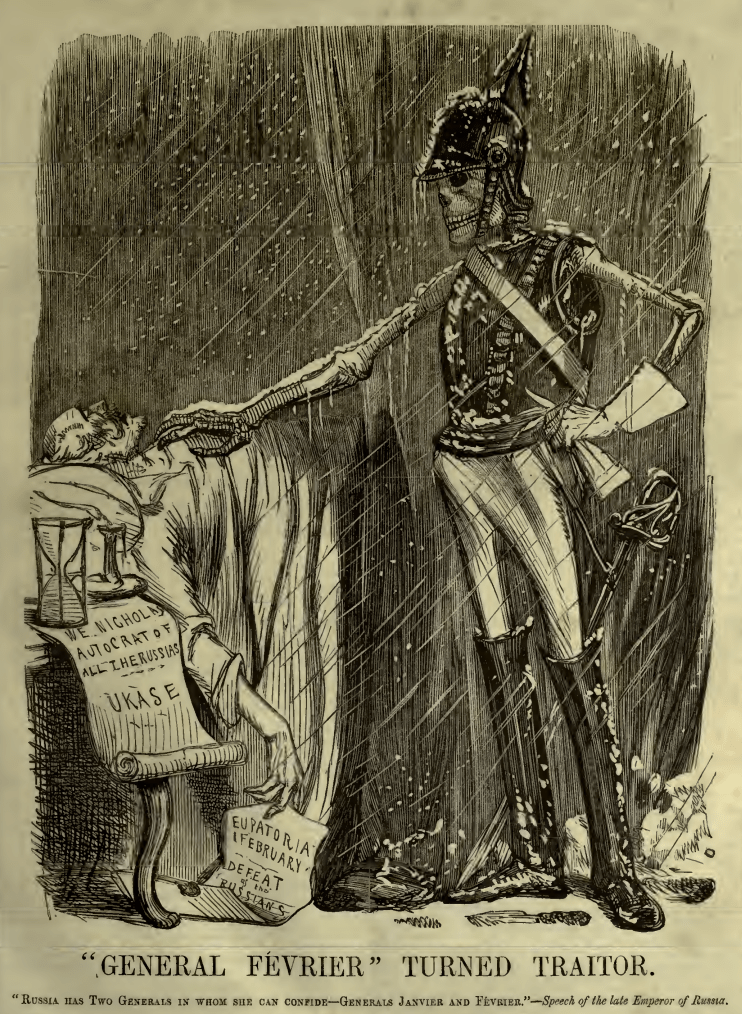
personify January and February as army commanders, especially in reference to winter as detrimental or destructive to a military campaign—apparently coined by Russian Prince Alexander Menshikov in 1855, during the Crimean War
personifies the winter season as an army commander, especially in reference to winter as detrimental or destructive to a military campaign—UK, 1777, in reference to the War of American Independence
from ‘the history of the four kings’, punning on ‘the four kings’ (the four playing cards in a pack, each bearing a representation of a king) and ‘the Book of Kings’ (the name of two, formerly four, books of the Old Testament)
18th century—used humorously and ironically to denote old news, usually with the implication that the person whom the speaker is referring to is simply stating the obvious or restating a well-worn or accepted truth
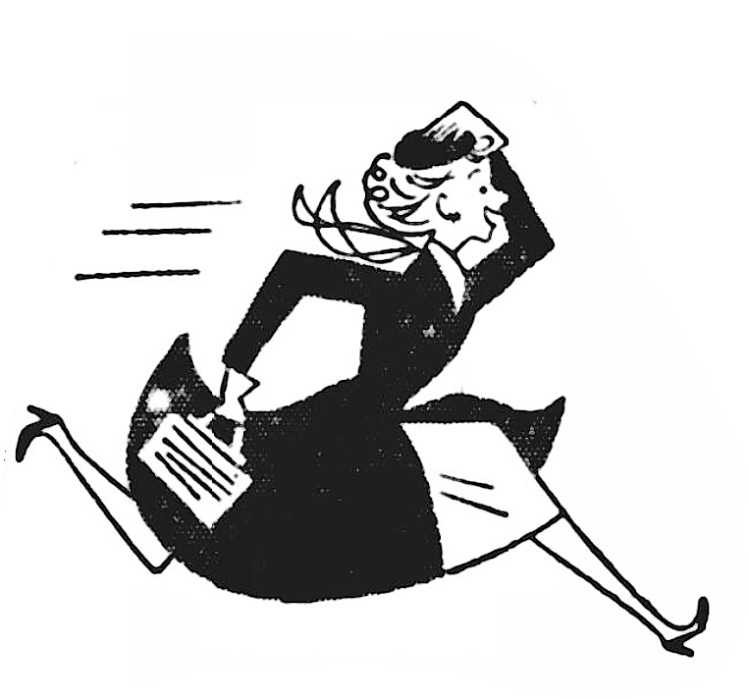
from the image of a speeding explosive projectile—primary meaning (of a motorcar, an aircraft, a motorcycle, an animal, a person): to move very fast—later (also ‘to go down like a bomb’ and ‘to go down a bomb’): to be very successful or popular
a television programme or cinema film exhibiting qualities of both drama and comedy—USA, 1998—blend of ‘soap (opera)’, or of ‘soaper’, and of ‘comedy’—coined on various occasions by different persons, independently from one another
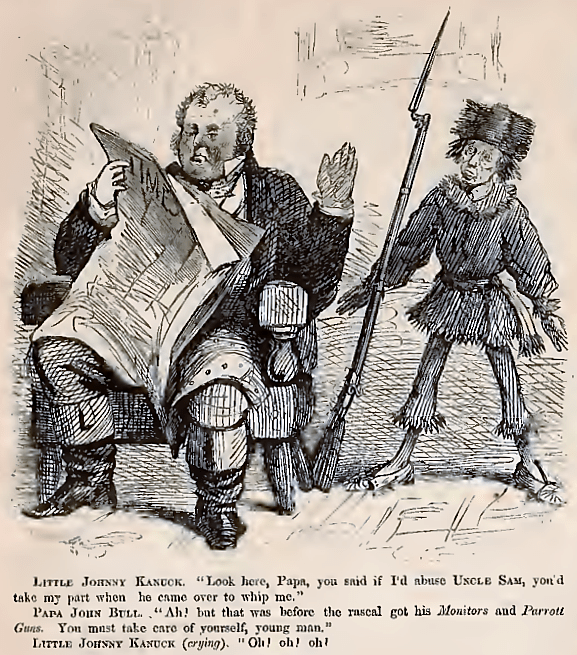
USA, 1858—a personification of the Canadian nation; Canadian people collectively; as a count noun: a Canadian—from ‘Canuck’, meaning Canadian—‘Johnny’ is used with modifying word to designate a person of the type, group, profession, etc., specified
to be grateful for one’s good fortune—18th century—from the notion that a planet, star or zodiacal constellation influences events and human affairs—this notion had given rise in the 16th century to the phrase ‘to thank (or to curse) one’s stars’